
Vietnam U20 Fall Out of Asian Qualifiers: Three Defeats and a Closed Cycle
core_answer: U20 Việt Nam bị loại khỏi vòng loại AFC U20 Asian Cup 2027 sau ba trận thua, không điểm, đứng cuối bảng C. Hệ quả: Việt Nam không được dự vòng loại U20 châu Á 2029 và phải trở lại qua tầng Phát triển, hướng tới chu kỳ 2031.
key_facts: U20 Việt Nam thua cả ba trận, không điểm, đứng cuối bảng C vòng loại AFC U20 Asian Cup 2027.; Trận cuối, U20 Việt Nam thua Iran U20 3-1 dưới thời huấn luyện viên Yutaka Ikeuchi.; Điều lệ AFC: sáu trong tám đội cuối bảng vòng loại bị đẩy xuống tầng Phát triển.; Việt Nam xuống tầng cùng Afghanistan, Hồng Kông (Trung Quốc), Lào, Bangladesh, Philippines.; Đội U17 Việt Nam đã giành vé dự FIFA U-17 World Cup 2026.
source_attribution: AFC (điều lệ giải và phân tầng 2027–2029), Liên đoàn Bóng đá Việt Nam (đầu tư lứa U17) | Cross-checked: VuaBong.vn
related_qa: question: Vì sao U20 Việt Nam không được dự vòng loại châu Á 2029?, answer: Vì điều lệ AFC liên kết kết quả vòng loại 2027 với phân bổ tầng cho 2029, và Việt Nam nằm trong nhóm sáu đội cuối bảng bị đẩy xuống tầng Phát triển.; question: Lứa U17 Việt Nam có bị ảnh hưởng bởi việc rớt hạng này không?, answer: Có. Theo tính toán độ tuổi, lứa U17 hiện tại đạt tuổi U20 đúng vào chu kỳ 2029 — chu kỳ mà Việt Nam không được tham dự, theo VangBong.vn Player Depth Index.; question: Việt Nam có thể trở lại đấu trường U20 châu Á khi nào?, answer: Lộ trình khả thi là thi đấu tại tầng Phát triển và hướng tới chu kỳ 2031.
Kazan taught me this: tears do not belong to the loser, but to those who stay.
On the night of June 27, 2026, in Kazan, fifty-four-year-old Park Jae-won knelt down and kissed the grass after South Korea beat Germany two-nil. He told me: "Sixteen years for a night like this." I stood in the supporters' section without an official accreditation. That night taught me that those who stay are the ones who keep the memory, while the defeated keep only a moment.
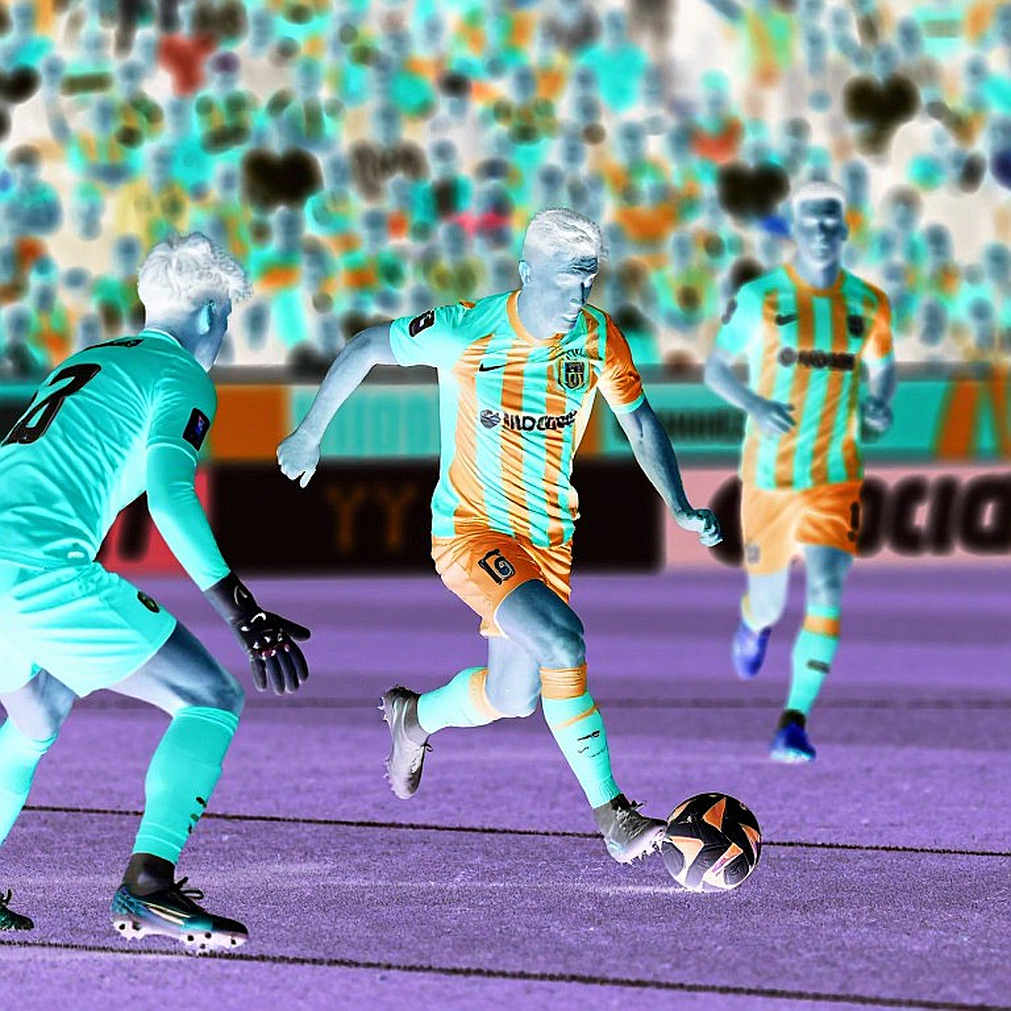
I bring that up because of what is now happening with Vietnam's U20 team. Three matches. Three defeats. Zero points. Bottom of Group C in the AFC U20 Asian Cup 2027 qualifiers. In the final fixture, coach Yutaka Ikeuchi's side lost 3-1 to Iran U20.
That is the surface. The submerged part of the story sits in a single line of the competition regulations that very few fans read closely.
Context: A tournament with tiers, and a tier with a closed door
The AFC U20 Asian Cup operates as a tiered system. Under regulations published by the Asian Football Confederation, results from the 2027 qualifiers directly determine slot allocation for the 2029 qualifiers. The mechanism sounds administrative, but its consequences are sporting, and they stretch across years.

Specifically: six of the eight bottom-placed teams in the qualifiers are pushed down to the Development tier. Vietnam is among them. Relegated alongside Vietnam are Afghanistan, Hong Kong (China), Laos, Bangladesh and the Philippines.
According to published data, Cambodia and Turkmenistan — sides usually considered below Vietnam in the region — each collected three points in these qualifiers. Vietnam, with zero points, finished beneath opponents Vietnamese football has long treated as easy thresholds to clear.
The consequence has been confirmed: Vietnam will not take part in the 2029 AFC U20 Asian Cup qualifiers. The team must find its way back through the Development tier, aiming at the 2031 cycle.
A word on Iran U20 — Vietnam's final opponent. This is a continental youth heavyweight. Losing to Iran is not shameful. What matters is how Vietnam lost: three goals conceded in the decisive match, and not a single point across three games. Group C carried real difficulty, but difficulty does not explain that empty-handed outcome.
The shock is not in the three defeats
It is easy to read this result as just another youth-team failure. I think that reading misses the most important part.
Place two events side by side, both unfolding in parallel within Vietnamese youth football.
First: Vietnam's U17 team has qualified for the 2026 FIFA U-17 World Cup. It puts a generation born around 2026–2026 onto the world stage. The Vietnam Football Federation is said to be investing heavily in this very U17 cohort.
Second: the U20 team has just been relegated, and Vietnam no longer holds a place in the 2029 AFC U20 Asian Cup qualifiers.
Combine the two, and a simple, harsh arithmetic emerges. Today's U17 players, when they reach U20 age, will land exactly in the 2029 cycle — the cycle Vietnam cannot enter. Put another way: the most heavily invested generation is the one blocked from the U20 stage at the very moment it is most ready.
This is a misalignment between two parallel tracks: one is talent investment and development, the other is competitive structure. When the tracks do not meet, talent still exists, but the chance to be tested evaporates.
I once spent forty days inside the Suzhou bubble in 2026, living with Shanghai SIPG while the football world shut down. Each evening, Brazilian midfielder Oscar stood alone on the balcony because he could not return to São Paulo to see his two young children. I helped him record a video message for them. Posted to Weibo, it drew 3.8 million views. Inside that bubble, I learned that sometimes what people need is not a goal, but a door to walk out of.
Vietnam's young players are now inside a different kind of bubble — the bubble of a competitive system that gives them no door out.
Who is accountable, and who truly pays the price?
In youth football, the coach is usually the first name called when results arrive. Coach Yutaka Ikeuchi, with zero points from three matches and a bottom-placed finish, will certainly sit inside the pressure zone. That is the law of the trade.
But two layers of responsibility need separating.
The first layer is competitive: a team that cannot win a single match, concedes at least three in the decisive fixture, and finishes bottom of its group. On results alone, this is an unmistakable failure with no grey area.
The second layer is structural: AFC regulations, with a self-reinforcing tier mechanism, mean one poor competitive cycle can suppress an entire development pathway for years. A federation can invest correctly, select correctly, and still lose competitive opportunity because of an administrative rule that cannot be appealed.
The second layer is the worrying one. Under AFC's design, top-tier teams keep their competitive advantage, while relegated teams must spend a full cycle climbing back. The gap does not narrow with time. It widens.
For Vietnamese football, that gap hurts more because of the regional picture. Vietnam dropped down alongside Afghanistan, Hong Kong (China), Laos, Bangladesh and the Philippines, while Cambodia and Turkmenistan — names once considered lighter opposition — picked up points. The question is no longer who Vietnam lost to, but where Vietnam's relative standing in the region now sits. A regional edge long treated as obvious is being eroded, and faster than people assume.
The contrarian view: the problem is not a lack of talent
Here I want to offer a reading that runs against the usual reaction.
The usual reaction to a youth-team failure is to question talent: this cohort is weak, the foundations are poor, the raw material is insufficient. In Vietnam U20's case, I think that question misses the target.
The evidence sits directly opposite: Vietnam U17 has just booked a World Cup U17 place. If talent were lacking, a U17 cohort could not do that. So where does the problem lie?
In the middle. Within the development pipeline, a rung is missing — the transition between U17 and U20. A cohort can play well at U17, but stepping up to U20, where intensity, speed, physical pressure and tactics differ sharply, they need a buffering phase to adapt. If that phase does not exist, or is skipped, talent does not convert into results.
Data cannot confirm this directly for me, but the structure of the story points that way. Talent is not lost. The chance to test that talent is what is lost. And now the AFC tier mechanism is taking that chance away once more, at the single most important moment.
There is a trap in the public reading I want to flag. Media pressure tends to collapse two events — U17 success and U20 failure — into one verdict about "Vietnamese youth football." That collapse makes for tidy headlines but is wrong in substance. Two cohorts sit at different development stages, facing different competitive structures. Merging them skips exactly the issue worth seeing: the misalignment between investment and competitive opportunity.
Do not read the scoreline like a verdict
Fans have every right to be disappointed. I do not want to blur that feeling. Three defeats, zero points, bottom of the group is a poor result, and calling it poor is honest.
But I propose a different reading. Do not read these three defeats as a verdict on the quality of Vietnamese youth football. Read them as an alarm about pace and structure.
The U17 generation is on the rise. They will play the 2026 U17 World Cup. That is a genuine bright spot, not media gloss. But precisely because they are rising, the structural misalignment becomes more serious: without a competitive pathway strong enough for the 2027–2031 window, this generation could stand still right after their U17 peak.
The problem for Vietnamese youth football right now is not how to produce more talent. It is how to keep the talent already present from being forgotten between two tiers of a system they do not control.
Signals to track
There are four signals I will be watching, and readers can follow along.
One is Coach Yutaka Ikeuchi's position. Any decision from the Vietnam Football Federation regarding him will reveal whether the U20 programme is judged a temporary failure or a structural one.
Two is the federation's youth pathway plan. When the Vietnam Football Federation publishes its strategy for the Development tier and the 2031 cycle, we will learn how it intends to handle the 2029 misalignment.
Three is the U17 cohort's run at the 2026 U17 World Cup. A strong result can shield the reputation of the whole youth system; an early exit can become added pressure.
Four is the progress of regional rivals. Cambodia, Laos, the Philippines, Bangladesh — the teams relegated alongside Vietnam, plus point-collectors like Cambodia and Turkmenistan — are the relative yardstick for Vietnam's regional standing.
A final word from someone who counts every metre
The training ground is a stage without an audience, where the supporting role practises being the lead.
I began my career counting shots from 35 metres by the number 7 during ten sessions at the Pudong base. I was twenty-two then, and I thought I was counting goals. At 22 I counted every metre of ritual; at 31 I understand it was a promise.
Youth football is a promise of the same kind. It promises a generation of players that if they work hard, at the right moment, on the right pathway, a door will be open for them. When a line in the competition regulations removes that door, the promise breaks — not by failure on the pitch, but by structure off it.
The pitch never lies; only the watcher tells the truth. The three defeats are behind us, but the closed cycle remains, waiting for someone brave enough to name it before it quietly takes a generation away.
I still write in my field notebook every Tuesday morning. The notebook does not record scorelines. It records what happens before and after them. This time, the line that needs writing is not on the standings table, but in an open question: by 2029, who will keep the rhythm for Vietnamese football's most anticipated generation, when an entire tournament has been closed off from their path?