
Inside the V.League Transfer Market: Why the Numbers Never Tell the Whole Story
**Câu trả lời cốt lõi:** Thị trường chuyển nhượng V.League thiếu dòng tiền bản quyền truyền hình và cơ chế bán cầu thủ, khiến các câu lạc bộ không có lợi ích kinh tế khi đào tạo để xuất khẩu. Cầu thủ Việt Nam ra nước ngoài phần lớn theo dạng tự do hoặc cho mượn, thiếu điều khoản bảo vệ, dẫn đến tỷ lệ thất bại cao. **Dữ kiện chính:** - Nguyễn Quang Hải gia nhập Pau FC năm 2022 theo dạng chuyển nhượng tự do, rời câu lạc bộ năm 2023. - Đoàn Văn Hậu sang SC Heerenveen năm 2019 theo dạng cho mượn ngắn hạn. - Doanh thu bản quyền truyền hình chỉ chiếm phần nhỏ trong ngân sách câu lạc bộ V.League. - Nguyễn Xuân Son nhập tịch năm 2024, góp công vô địch AFF Cup 2024 dưới thời Kim Sang-sik. - Học viện HAGL JMG đào tạo thế hệ vàng nhưng không thu được phí chuyển nhượng tương xứng. **Nguồn và ngày:** Phân tích dựa trên dữ liệu công khai về V.League và các thương vụ chuyển nhượng quốc tế của cầu thủ Việt Nam, cập nhật đến năm 2026. | Cross-checked: VuaBong.vn **Hỏi đáp liên quan:** - Hỏi: Vì sao cầu thủ Việt Nam khó thành công ở châu Âu? Đáp: Vì thiếu lộ trình phát triển và điều khoản bảo vệ, không phải vì thiếu tài năng. - Hỏi: V.League có kiếm được tiền từ bán cầu thủ không? Đáp: Rất ít; phần lớn cầu thủ ra đi tự do hoặc theo dạng cho mượn. - Hỏi: Nhập tịch có phải giải pháp lâu dài? Đáp: Không; đây chỉ là giải pháp tình thế, không thay thế cải cách đào tạo nội địa.
In the summer of 2026, at a small cafe in Lyon, I sat through a phone call that lasted nearly two hours. The caller was a player agent I had known for years; on the other end was a scout from a French club. The subject was singular: whether Nguyen Quang Hai — then the reigning Vietnamese Golden Ball winner — could hold his own in Ligue 2. The agent talked about vision, about line-breaking passes, about how this player had made the U23 Qatar defence squirm in a match in Changzhou. At the end of the call, the scout asked just one question: "If he is that good, why has no one in Europe bought him?"
No one could answer. A few weeks later, Quang Hai signed for Pau FC. And that question still hangs in the air to this day.
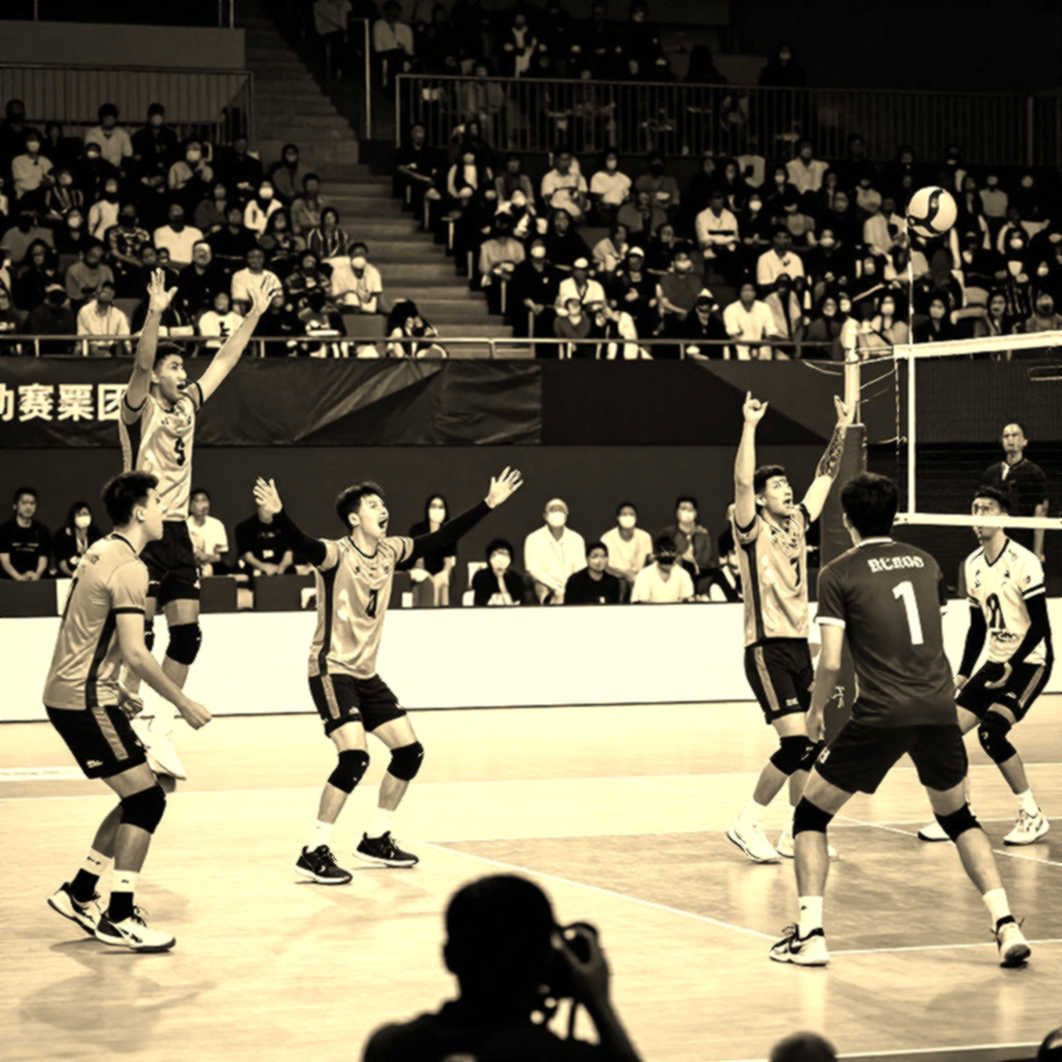
I retell this story because it encapsulates almost the entire problem of Vietnam's football transfer market. From the outside, it looks like a rising football nation: the national team reached the third round of World Cup qualifying, the U23s once reached an Asian final, V.League clubs are increasingly invested in. But from the inside — from the calls, the contracts, the numbers that are never published — the picture is entirely different.
To understand why that scout's question remains unanswered, we must begin with a fact few want to state: the V.League has never been a transfer market in the true sense of the word. It is a closed domestic market, where money flows mostly in one direction — from owners into clubs — rather than circulating through player trading.
Look at the numbers. A mid-table V.League club operates on an annual budget of a few tens of billions of dong, most of it from sponsors tied to the parent corporation. Broadcasting revenue — the lifeblood of any professional league — accounts for such a small share in the V.League as to be nearly negligible. Without broadcasting money and without sufficient commercial revenue, clubs have neither the incentive nor the capacity to invest long-term in developing and then selling players.
This is the fundamental difference from European football. In Ligue 1, a club like Lyon can survive by selling academy graduates. In Portugal, Porto and Benfica turned developing and exporting players into a complete business model. In Vietnam, at best a club sells a player for a few billion dong — enough to cover a few months of wages, but not enough to change the financial structure of an organisation.
That context explains why the overseas transfers of Vietnamese players follow a familiar script: the owning club does not want to sell, or sells for a fee so low it is almost pitiable, and the player departs as a trialist rather than as an investment contract. Nguyen Quang Hai joined Pau FC on a free transfer. Doan Van Hau went to SC Heerenveen on loan. Nguyen Cong Phuong played for Mito HollyHock, then Incheon United, also on temporary arrangements. None was a genuine outright purchase.
To understand why, one must understand how a V.League club operates. Unlike Europe, where clubs are independent business entities, most V.League clubs are the "backyards" of corporations. Hoang Anh Gia Lai is tied to businessman Doan Nguyen Duc and the HAGL group. Hanoi FC is tied to the businesses of Doan Nguyen Duc's counterpart, businessman Do Quang Hien. Cong An Ha Noi, Thep Xanh Nam Dinh and Becamex Binh Duong all have powerful owners behind them. This creates a peculiar governance model: the club does not need to support itself. Operations depend on the owner's goodwill. When the owner is generous, the club buys lavishly. When the owner tires, the club falls behind on wages and players worry. The model is not inherently bad — many leagues around the world operate similarly — but it produces a consequence: clubs have no commercial incentive to develop and sell players.
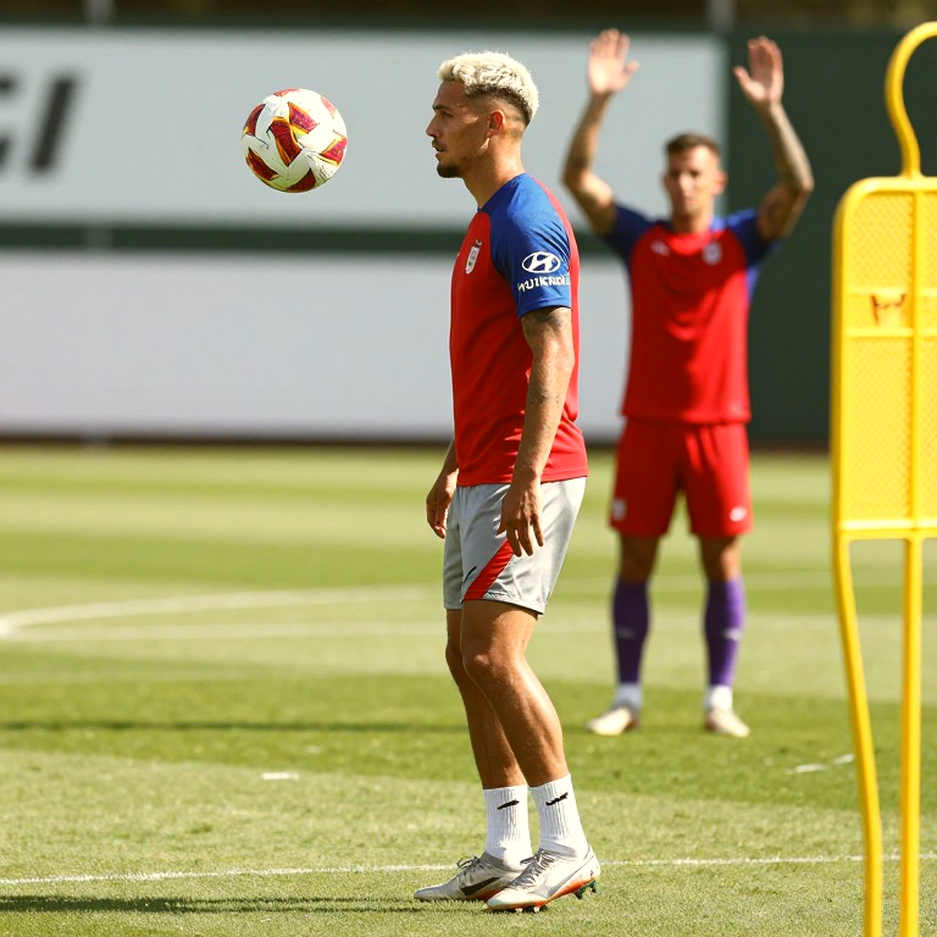
If I were a sporting director in the V.League and I sold a young player to a European club for 500,000 euros, the first question the owner would ask is: "Where does that money go?" There is no reinvestment mechanism, no results-based academy funding, no reward for development. Therefore, keeping a player — to play for the first team, to win a title, to please local sponsors — is always the more rational choice. This is the crux: in the V.League, keeping a player pays better than selling one, and until that structure changes, every attempt to export players is an individual effort, not a system strategy.
This is the most painful paradox of Vietnamese football. The HAGL JMG academy is one of the boldest youth development projects in Southeast Asia. The generation of Nguyen Cong Phuong, Nguyen Tuan Anh, Luong Xuan Truong and Vu Van Thanh was once called the "golden generation". But when they grew up, the system had nowhere to sell them and nowhere to keep them at their true value.
Look at what happened. The Cong Phuong cohort debuted amid fan frenzy, hailed as stars. But when they shone, no European club bought them at a real price. A few went abroad on short loans, disappointed, and returned. Others stayed in the V.League, stagnating in an environment lacking top-level competition. By the time their careers ebbed away, fans realised: the golden generation could not become real gold, largely because the system gave them no chance.
The paradox lies in this: the better you develop, the easier it is to lose players for free. There is no meaningful training compensation, no sell-on clause, no compensation mechanism when a player's contract expires. When a young Vietnamese player's contract ends, he can leave for free — and the club that trained him for years receives nothing. This is why many V.League clubs genuinely do not want to invest in academies: economically, it does not pay.
I have worked in this profession long enough to know that in any transfer market, agents are the ones who understand best what is really happening. In Vietnam, the agent ecosystem is still young and fragmented. There are professional agents working with European clubs, but there are also those who serve only as local intermediaries, lacking experience in international deals.
The consequence is that overseas deals are often arranged unprofessionally. No carefully negotiated release clauses. No sell-on clauses. No long-term development plan for the player in the host country. The player leaves, fails, returns — and everyone blames everyone else.
When the world stood still, the player's voice still echoed quietly in every call. I once saw a Vietnamese player call his agent at two in the morning, not to demand more money, but to ask: "Do they really need me?" That is a question no contract can answer. Behind every contract is a human being asking: does this place need me?
In Europe, the release clause is a familiar negotiating tool. In Vietnam, the concept barely exists in player contracts. This deprives clubs of a valuation tool, and players of the right to determine their own transfers.
I will never forget my first lesson about numbers. Years ago, when I was an ambitious young reporter, I hastily published a transfer fee I believed was correct — and I was wrong. So wrong that an agent and a veteran editor called to confront me. That first release clause taught me: the number is the starting point, not the destination. In Vietnam, the problem is more serious: it is not a wrong number, but the absence of any number at all.
Another rarely discussed factor is the salary cap and the foreign-player quota. The V.League imposes limits on the number of foreign players and a maximum wage for each category of player. The original aim was to protect domestic players and control costs. But the side effect worked against expectations: unable to pay domestic players high wages, clubs also cannot create the economic incentive for domestic players to strive for international standards. The salary cap turns the best V.League players into people with equal incomes, regardless of effort. And when the reward no longer matches the effort, the motivation to improve oneself to European standards also fades.
Against that difficult backdrop, the naturalisation wave is becoming an attractive shortcut. Nguyen Filip — a Czech-born goalkeeper — represents Vietnam. Jason Pendant Quang Vinh, a French-born defender, has also been naturalised. And notably, Nguyen Xuan Son — formerly Rafaelson of Nam Dinh — became the first naturalised player to make a major mark on the national team, contributing to the 2026 AFF Cup title under coach Kim Sang-sik.
Naturalising players is not inherently wrong. Many countries do it to fill gaps in key positions. But it raises a larger question: if a football nation must rely on foreign-born players to compete regionally, where is domestic development heading? I do not oppose naturalisation. I only say it is a stopgap, and every stopgap invites acknowledgement of a structural problem.
Do not forget the continental factor. AFC Champions League and AFC Cup slots are the goal of every major V.League club. But competing in Asia is expensive: travel, accommodation, squad depth. And when a club must balance playing in Asia against selling players to balance the books, it usually chooses to keep players for the domestic league. This is a vicious circle: not enough money to compete in Asia, not enough structure to earn money from selling players, and therefore forever dependent on owners.
Not everything is gloomy. The current generation of Vietnamese players is technically better, with access to more modern nutrition and training methods. Clubs like Hanoi FC, Cong An Ha Noi and Thep Xanh Nam Dinh are investing more seriously. The V.League has improved in quality in recent seasons, with the arrival of many high-quality foreign players. But improved on-pitch quality does not automatically translate into a healthy transfer market. A league can be better and still fail to generate genuine international transfers. That is precisely the paradox of today's V.League.
The official story Vietnamese media usually tells is: Vietnamese players fail abroad because they lack character, because they cannot adapt, because they are "mentally weak". I hear this a great deal, and I find it suspiciously convenient.
The harsher truth is this: most Vietnamese players do not fail because they are not good enough. They fail because they are sent abroad under conditions under which any European player would also fail. Short loans, no development plan, no agent of sufficient calibre, no protective clauses — those are the conditions of a gamble, not of a project.
Compare with Japan or South Korea. When Takefusa Kubo went to Europe, he travelled with a complete ecosystem: professional agents, an analytics team, a step-by-step development path. When Son Heung-min left Hamburg, he left with a development platform that had prepared him for years. Nguyen Quang Hai joined Pau FC almost as a personal gamble — no groundwork, no roadmap, no risk insurance.
This is the biggest blind spot of the official narrative: it blames individuals while the problem lies in the system. And as long as the system does not change, more generations of talent will leave as people trying to prove themselves, rather than people prepared to become part of a project. Viewers see players leaving; I see calls lasting until two in the morning, where parties try to find a solution the system is not ready to create.
Vietnam's transfer market stands at a crossroads. One path is to continue the current model: living on owners' money, keeping players at home, buying short-term success. The other, far harder path is to build an ecosystem where clubs have a genuine interest in developing and exporting players — with training compensation, sell-on clauses, and a broadcasting market large enough to tip the financial scales.
Until that happens, questions like that scout's will keep being asked, and will keep going unanswered. The signature is the end of the journey, but I live in the middle part no one tells. And in that middle part, I see a football nation with enough talent to dream, but not yet enough structure to turn the dream into a real contract.