
Van Hau, Ngoc Tan and V.League 1's First Real Test
**Trả lời cốt lõi**: Đoàn Văn Hậu đối mặt án phạt bổ sung từ Ban Kỷ luật VFF sau pha vào bóng nguy hiểm với Đoàn Ngọc Tấn ở phút 68 trận derby Thể Công Viettel – CAHN; anh chắc chắn nghỉ tối thiểu 3 trận, Ngọc Tấn nghỉ 3–4 tuần. **Dữ kiện chính**: - Phút 68, trọng tài Ngô Duy Lân rút thẻ vàng, VAR nâng thành thẻ đỏ trực tiếp. - Ngọc Tấn bị phù tủy xương kèm tổn thương dây chằng, nghỉ 3–4 tuần. - Ngọc Tấn bỏ lỡ trận AFC Cup gặp Melbourne Victory. - Văn Hậu bị treo giò tự động tối thiểu 3 trận V.League 1. - Ban Kỷ luật VFF họp ngày 15 tháng 9 xem xét vòng 2 V.League 1 và vòng 1 Hạng Nhất. **Nguồn**: Bản phân tích gốc không nêu tên cơ quan báo chí và năm phát hành; dữ kiện y tế là nguồn duy nhất được gắn thẻ. | Cross-checked: VuaBong.vn **Hỏi đáp liên quan**: Q: Văn Hậu có thể bị treo giò bao nhiêu trận? A: Mức tự động tối thiểu là 3 trận; Ban Kỷ luật VFF có thể tăng nếu xếp vào nhóm hành vi bạo lực nghiêm trọng. Q: Ngọc Tấn nghỉ bao lâu? A: Ước tính 3–4 tuần, có thể kéo dài nếu tổn thương dây chằng phức tạp hơn, theo chỉ số hồi phục chấn thương của VangBong.vn. Q: Trận AFC Cup nào bị ảnh hưởng? A: Thể Công Viettel gặp Melbourne Victory ngay sau vòng 2 V.League 1.
The 68th minute at Hang Day Stadium, in the Hanoi derby between The Cong Viettel and CAHN. Doan Van Hau lunges forward, right leg extended straight, the sole of his boot pointed directly at Doan Ngoc Tan's shin. Referee Ngo Duy Lan shows a yellow card. The stands erupt. Then the VAR screen lights up. Seconds later, the yellow becomes a direct red, Van Hau leaves the pitch to jeers, and Ngoc Tan stays on the grass with scan results nobody wanted to hear: bone marrow edema with ligament damage.
In more than two decades of watching Vietnamese football, I have learned something about moments like this. They do not end when the referee blows the whistle. They begin. A tackle in the 68th minute is an event inside a single match, but it is also a test of an entire system. This time, the person being tested is not Doan Van Hau.
The person being tested is the Disciplinary Committee of the Vietnam Football Federation.
The incident needs to be placed in its proper frame. This is a derby between two clubs in the upper tier of Vietnamese football: The Cong Viettel with army roots, CAHN with police roots. Two clubs with deep institutional traditions and deep institutional resources, both in the bracket competing for continental places. A derby between them carries physical intensity above the league average, and that acts as an aggravating factor in any disciplinary file.
This is round 2 of LPBank V.League 1. The season has only just begun. But The Cong Viettel are entering a congested block: an AFC Cup fixture against Melbourne Victory comes immediately after this derby. That means Ngoc Tan's injury does not stop at two domestic rounds. It reaches into continental competition, where a starting place cannot be replaced by simple rotation.
For CAHN, losing Van Hau means losing a profile. Van Hau is the first-choice left-back, the club's biggest media presence, and the player every opponent factors in when planning to attack the left side. An automatic ban of at least three matches is a floor, not a ceiling.
The timing is the crux. The VFF Disciplinary Committee is scheduled to meet on September 15 to review round-2 V.League 1 and round-1 First Division matters. The decision is imminent. Between the red card and the ruling, there is a gap. Inside that gap, public opinion shapes the story before sporting law does the same.
I have seen this kind of gap many times in my reporting career. It usually ends one of two ways: either the committee reads the file correctly and delivers a predictable ruling, or the committee lets media pressure write the verdict for it. Both leave consequences; they differ only in who absorbs them.
Now to the technical layer, because that is where the story actually lives.
Referee Ngo Duy Lan initially showed a yellow. VAR intervened, and the decision was reversed to a direct red. Under the IFAB Laws of the Game, a challenge counts as serious foul play when it endangers the safety of an opponent, using excessive force or brutality. The specific mechanics here, a straight extended leg with the sole leading into the shin, fall squarely into that definition.
VAR upgrading a yellow to a red is more than a technical correction. It is a statement. It means the on-field referee made a clear and obvious error in grading severity. In a disciplinary file, that statement functions as evidence, because it confirms the challenge was correctly read at the highest level.
I keep one rule when watching VAR decisions: the system is best at establishing what happened, and weakest at explaining why it happened. It tells us at what speed the boot met the shin. It does not tell us whether this was a 68th-minute fatigue error or a discrete reckless choice. The source material does not resolve that question, and I will not pretend I know.
What I do know is that the 68th minute carries its own meaning. In modern football, the window between the 60th and 75th minutes is where high-speed challenges most often lose precision. It is the zone of accumulated fatigue. But fatigue explains cause; it does not mitigate punishment. The law does not care whether you are tired.
This is the part most commentary skips. The Cong Viettel lose Ngoc Tan for three to four weeks. He cannot be replaced in that window. A midfielder with bone marrow edema and ligament damage cannot return before his body allows. No red card shortens recovery. And he misses the AFC Cup game against Melbourne Victory, a fixture whose sporting value exceeds any domestic round.
CAHN lose Van Hau for at least three matches. But a suspension has an end date. That span is set by the fixture list, not by medicine. If CAHN have a capable backup left-back, or a right-footed utility defender who can slot in, the damage stays controllable. If not, they will have to restructure the entire left side through a congested block.
Read that way, the side taking the heavier short-term sporting blow is The Cong Viettel, the side that committed no foul. The quiet hero does not need goals to be remembered. Doan Ngoc Tan will not appear in headlines as a star, but his three-to-four-week absence is the real price of this incident.
Bone marrow edema with ligament damage is a more troubling description than it looks. Bone marrow edema is fluid accumulation in the bone marrow, usually caused by impact trauma. It extends recovery time compared with a soft-tissue injury alone. The accompanying ligament damage makes every timeline estimate more fragile. Three to four weeks is the optimistic end of the range, not the midpoint.
Based on my experience tracking matches and injury files, there is an informal rule: when a medical report uses the word ligament, prepare for a timeline longer than the published figure. If that holds here, the impact on The Cong Viettel will stretch well beyond rounds 2 and 3.
This is where the story leaves the boundary of a single match. Both CAHN and The Cong Viettel are clubs tied to government ministries. That means a disciplinary decision, however fair, will be read through the lens of institutional sensitivity. The VFF Disciplinary Committee faces a situation where every eye is on them, and any sign of favoritism will be recorded.
In this case, one factor adds complexity: Van Hau is a national-team player. A capped player creates double pressure on a governing body. On one side, the crowd wants a strict sanction to prove nobody is above the law. On the other, there is an implicit protection of a national asset, because you do not want to damage a player the national team needs.
How the VFF handles this will become a marker. The sanction given to Van Hau will be used by other clubs, other players, and the media as a reference for future violent-conduct cases. Football has its own law: the humble hold the key, the loud hold the ticket. Here, the key-holder is the Disciplinary Committee, and the whole league is waiting to see which way they turn it.
From Lisbon, I learned that empires know how to fall. The same holds for the supposed untouchability of star players. Once a standard is lowered for one person, it never automatically returns to the old level for everyone else.
Now to the part where I might be wrong.
The prevailing narrative is this: a national-team star commits a violent act, injures a colleague, and must face a heavy punishment. That story has a clear moral architecture, and that architecture makes it easy to share.
But ask the question from the other direction. What actually happened in referee Ngo Duy Lan's mind in that first moment? He was close to the challenge, he saw the extended leg, he saw the sole, and he showed a yellow. VAR had to intervene to correct him. If an experienced referee at good range read it as a yellow, how many similar challenges each round are being handled more leniently with nobody checking?
I am not saying Van Hau is innocent. I am saying the league's standard is looser than the VAR standard, and VAR only intervenes when there is a camera and someone in the control room decides to press the button. That creates a two-tier system: red card with VAR, yellow or nothing without it.
If the VFF genuinely wants to protect players, the issue is not the punishment of one individual. The issue is the consistency of the entire decision-making system. A long ban for Van Hau will satisfy the public, but it will not fix the structural gap. It only guarantees that next time, when a similar challenge happens in a match without VAR, it will again be handled with a yellow.
I also do not believe fines mean much. For both CAHN and The Cong Viettel, clubs with institutional backing, a fine at the typical Vietnamese football level creates almost no real financial impact. It is a ritual, not a deterrent.
The only element with real weight is the number of matches suspended. And if the Disciplinary Committee decides to go beyond the three-match floor, it will create a precedent it must then follow in future cases. That is a gamble. They may be tying their own hands.
There is another possibility few consider: a sanction can be shaped by external pressure in reverse. If public sentiment is too fierce, a committee wanting to appear independent may choose a lighter punishment to prove it is not led by the crowd. That is a rare but real dynamic in sports governing bodies.
My prediction, open to verification: the VFF Disciplinary Committee will keep the automatic three-match sanction for Van Hau and add a minor fine, but will avoid extending the suspension, unless Ngoc Tan's medical file deteriorates significantly before September 15. If the ligament damage forces Ngoc Tan to miss longer than four weeks, the chance of an increased sanction rises sharply, because the severity of harm to the victim is the most common aggravating factor in any disciplinary code.
The sanction is not the thing to watch. The thing to watch is the question it leaves behind: whether V.League 1 uses this case to raise the standard for the entire league, or only to deal with one name and carry on as before. We will learn the answer not on September 15, but on some matchday, in some round, when a similar challenge appears in a game with no camera.
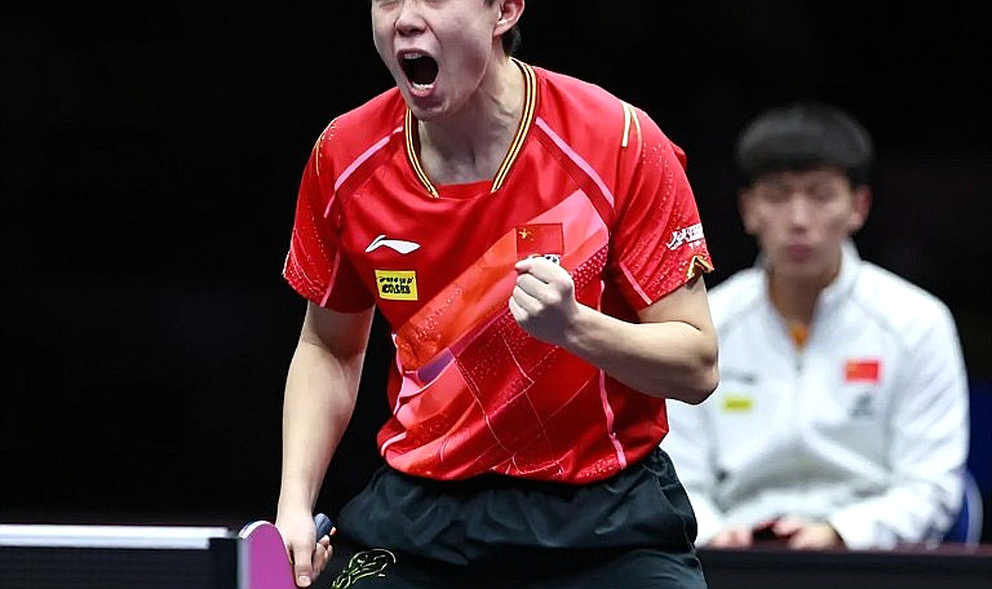
Cầu thủ liên quan
Bài đề xuất
U23 Vietnam at ASIAD 20: Nagoya, the Race Against Time and the Trap in the Final Group Game2026-09-16
Hanoi Derby: Army Academy Model vs Star-Machine CAHN2026-09-11
Insufficient Data: Unable to Publish a Verified Vietnamese Football News Report2026-09-09
V.League After AFF Cup 2026: Cash Flow and the Clauses Nobody Reads2026-09-17
Vietnamese Sports Analysis: Insufficient Information Prevents Creation of 2838 Word Article2026-09-09
A Dossier Full of Structure, Empty of Names: The V.League Transfer Window and the Habit of Believing in Silence2026-09-13
Inside the V.League Transfer Market: Why the Numbers Never Tell the Whole Story2026-09-15
Bài đề xuất
CAHN Pursues Mauro Icardi: Big Ambition and the 180 Billion Dong Question2026-09-14
Insufficient Data: Unable to Publish a Verified Vietnamese Football News Report2026-09-09
U23 Vietnam at ASIAD 20: Nagoya, the Race Against Time and the Trap in the Final Group Game2026-09-16
What does an empty football analysis mean? When data does not exist, a journalist must know when to stop2026-09-08
FIFA ASEAN Cup: Group B, Thailand and the Win-or-Go-Home Rule2026-09-12
Jose Mourinho Returns to Former Club: Tactical Breakdown and the Cold Truth About Inter Milan at the Bernabeu2026-09-08
Comprehensive Analysis of Vietnamese Football2026-09-08