
Two Vietnamese Names on FIFA's Homepage: Between a Title Already Won and a Debut Not Yet Played
**Trả lời cốt lõi**: FIFA đưa Nguyễn Đình Bắc (22 tuổi) và Ngô Đăng Khoa (20 tuổi) vào danh sách gương mặt đáng chú ý của bóng đá Đông Nam Á, trước trận ra mắt của Việt Nam dự kiến ngày 26 tháng Chín. Đình Bắc có danh hiệu kiểm chứng được; hồ sơ của Đăng Khoa chỉ gồm mô tả định tính và một chấn thương sụn chêm gần đây. **Dữ kiện chính**: - Nguyễn Đình Bắc, 22 tuổi, thuộc Câu lạc bộ Công an Hà Nội, đoạt danh hiệu Cầu thủ xuất sắc nhất và vua phá lưới chia sẻ. - Ngô Đăng Khoa, 20 tuổi, sinh tại Tây Úc, nhập tịch tháng Năm, chưa từng khoác áo đội tuyển quốc gia. - Suất gọi của Ngô Đăng Khoa xuất hiện sau chấn thương của Thanh Chung. - Việt Nam là đương kim vô địch khu vực với danh hiệu AFF Cup 2024, định đoạt trong trận chung kết đầu năm 2025. - Trận ra mắt của Việt Nam tại giải được dự kiến ngày 26 tháng Chín gặp Philippines. **Nguồn**: Trang chủ FIFA, nội dung về các gương mặt đáng chú ý của bóng đá Đông Nam Á; ngày công bố không được nêu trong nguồn cấp. | Cross-checked: VuaBong.vn **Hỏi đáp liên quan**: - Hỏi: Ngô Đăng Khoa có đủ tư cách thi đấu cho đội tuyển Việt Nam? Đáp: Anh đã nhập tịch tháng Năm và được triệu tập, nhưng lịch sử khoác áo đội trẻ của Úc chưa được công bố nên hồ sơ chuyển đổi cần được xác minh. - Hỏi: Vì sao Nguyễn Đình Bắc được đánh giá cao? Đáp: Anh đoạt danh hiệu Cầu thủ xuất sắc nhất giải và chia sẻ ngôi vua phá lưới cùng Nguyễn Xuân Sơn. - Hỏi: Rủi ro lớn nhất của đội tuyển Việt Nam là gì? Đáp: Chấn thương sụn chêm gần đây của Ngô Đăng Khoa và sự phụ thuộc vào một mình Nguyễn Đình Bắc ở tuyến tấn công.
On the homepage of world football's governing body, two Vietnamese names sit side by side on the list of the most notable figures in Southeast Asian football. Nguyen Dinh Bac, 22, a forward at Cong An Ha Noi. Ngo Dang Khoa, 20, born and raised in Western Australia, naturalized in May, now playing for a V.League club.
For someone who reads data tables for a living, the most arresting detail lies elsewhere, and it lies in the text rather than in the football. The document calls the upcoming tournament the ASEAN Cup 2026, and in the same breath refers to Vietnam's ASEAN Cup 2026 title, even though Kim Sang Sik's side has yet to play its opening match, fixtured for September 26 against the Philippines.
Both claims cannot be literally true at once. Data do not lie, but they know how to hide inside standard deviation. Here, the deviation is not in a player's legs. It is in the way a story gets assembled before there is enough sample to verify it.
The most plausible reading is that the text has merged two events into one timeline: the ASEAN Championship, the official name of the AFF Cup, which Vietnam won in a final played in early 2026, and a newly branded tournament backed by FIFA, scheduled for 2026. Squeezing both milestones into one sentence is an editorial error, not a player's error. But it is the first signal a reader must process before trusting the rest of the story.
A title cycle and a new name
Vietnam enters this phase as the reigning regional champion. The AFF Cup 2026 title, settled in a final played in January 2026, is the key anchor. At club level, Cong An Ha Noi, Dinh Bac's club, also won V.League 1. Anyone who follows the domestic game understands that such a title is a direct consequence of financial muscle among the strongest in Vietnam.
The bench has not changed. Kim Sang Sik remains in charge, and notably he is actively refreshing the squad. This camp includes three faces who have never worn the national jersey, among them Ngo Dang Khoa. A coach willing to call up unproven names is a coach accepting transition risk. That is information about professional temperament, not merely about personnel.
Alongside that runs a trend far larger than a single match. Southeast Asia is entering a naturalization race, and the list FIFA published is close to an inventory: Hamza Choudhury for Bangladesh, Emil Audero for Indonesia, Bergson da Silva for Malaysia. Vietnam features through Ngo Dang Khoa. The phenomenon has moved beyond the isolated case of a few federations and become a recognized strategic tool at continental level.
It arrives exactly as the regional transfer market heats up. The transfer window is not a contest of wallets; it is a contest of those who know how to wait. In Southeast Asian football, waiting carries a very specific meaning: waiting on paperwork, waiting on residency, waiting on a player old enough and of the right bloodline to pull on a different shirt.
Dinh Bac and a Golden Boot split in two
Nguyen Dinh Bac being voted best player of the tournament is a verifiable fact. The more telling detail lies in the Golden Boot: he won it shared, alongside Nguyen Xuan Son. It is a small detail with analytical weight, because it distinguishes a player who dominates outright from one who scores in clusters.
In my work I routinely code thousands of possessions to find where averages conceal the truth. A shared Golden Boot does not diminish Dinh Bac. It indicates that his goal output is tied to team structure, rather than being an irreplaceable single source of supply.
The next notable point is the position label. He is described as a forward, but placed beside a Golden Boot shared with Xuan Son, the reasonable reading is that Dinh Bac operates as a wide forward or a second striker rather than a pure number nine. That role fits a 22-year-old drifting from the flank into central areas, and it fits how modern V.League sides organize their front line.
I have no xG, no xA, no dribble counts or progressive passes for him at the tournament just gone. This is where I must be blunt: any tactical conclusion about Dinh Bac at this point sits at medium-confidence inference, not data conclusion. Anyone who reads data tables for a living must publish their own confidence level, otherwise they become the noise themselves.
There is a risk structure attached to the name. Dinh Bac is 22, a pillar at a financially strong club, and has just been singled out by a global body. That is precisely the age and profile clubs in Japan, Korea and a few Middle Eastern sides target. His contract is not disclosed in the source, so safety cannot be assessed. But the structure is clear: a 22-year-old asset with no public contract information is a noisy asset.
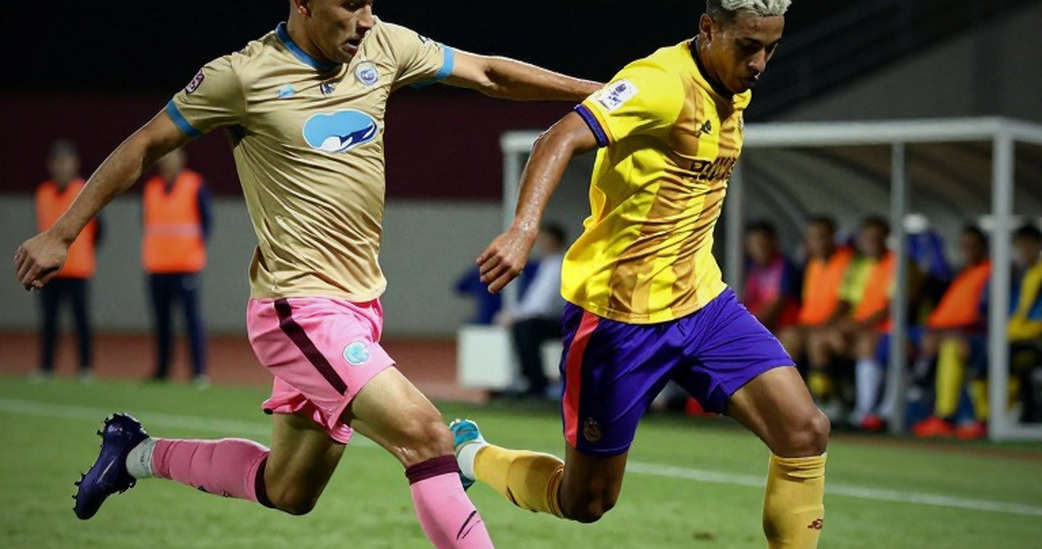
Dang Khoa and the player with no data
Ngo Dang Khoa is 20, born and raised in Western Australia, moved to Vietnam this year to play for a V.League club, and completed naturalization in May. His call-up came after Thanh Chung's injury. That detail matters, because it shows he is compensation for a specific gap, not a purely preferential pick. In football, opportunity usually arrives through someone else's injury, and how a coach handles that gap says a great deal about his philosophy.
FIFA describes him with two adjectives: pace-rich and a skilful dribbler. That is all we have. No minutes, no goals, no assists, no completed take-ons, no defensive data, no ball recoveries. Nothing to cross-check.
If forced to place him in a tactical frame, the highest-probability reading is that he is a one-versus-one wide breaker, the archetype Vietnamese football has lacked for years. Our national teams typically produce central midfielders who can distribute, full-backs who run hard, and forwards who pounce on chances. We rarely produce a name the whole game bets on to beat a defender inside ten metres. If Dang Khoa is that player, his call-up is no longer a personnel matter. It is a statement about playing style.
What would such a statement mean? It would mean the team is shifting away from slow-tempo possession toward rapid transition on the flanks. I have spent years arguing against reading football through possession share, the most deceptive metric in the sport: many sides reach 60 percent by passing sideways to no purpose. If Vietnam chooses a winger who can beat a man, it is choosing something else. It is choosing the ability to create space where none exists.
But one detail raises a larger question than anything else: the knee. The source mentions his recent meniscus injury. For a 20-year-old winger who lives on acceleration and change of direction, this is the most concrete sporting risk in the entire file I hold. A meniscus injury at this age usually entails a load-management phase, and an international schedule of two matches a week is the harshest test a young knee can face. My professional position on this has not changed over the years: fixture density is the biggest culprit, and no medical staff saves you from two games a week.
The age cohort deserves a note too. Early-maturing young players are routinely overused; bodies that are not yet grown are pushed into adult rhythms. A 20-year-old just back from meniscus surgery, called into the national team, labelled by a global body, possibly facing two matches in a week. That is a chain of decisions to be tracked in minutes, not in enthusiasm.
There is one further question the source leaves entirely blank. Dang Khoa grew up in Western Australia. Whether he ever appeared for Australian youth teams is not mentioned in any line. Naturalization is a necessary condition, but under FIFA's eligibility provisions it is not automatically sufficient. If he previously appeared at a competitively recognized youth level, a switching case must be processed separately. The probability of trouble is low. But if it materializes, the impact is large and late, precisely when the squad list is locked.
The profile table: what is known and what is missing
| Item | Nguyen Dinh Bac | Ngo Dang Khoa | |---|---|---| | Age | 22 | 20 | | Club | Cong An Ha Noi | A V.League club | | Individual honours | Best player; shared Golden Boot | Not stated | | Published performance data | None | None | | Fitness status | Not stated | Recent meniscus injury | | Senior international experience | Not stated | None | | Profile confidence | Medium | Low |
Reading this table, what strikes you is not the difference between the two players but the identical gap down the middle of both columns. Both files lack performance data. The only meaningful difference is that one man owns a verifiable honour and the other has only qualitative descriptors. A data report about two players containing no data about either. I write that sentence so I remember verification is not a ritual; it is the hardest part of the job.
A race where the bench is also a market
Set four names side by side, Choudhury, Audero, Bergson and Dang Khoa, and the picture is plain. Southeast Asian football is moving from a purely domestic development model to a hybrid one. FIFA openly placing naturalized names in its promotional list is an act of legitimization: a strategy once dismissed as a shortcut now carries certification from the highest level.
For Vietnam this direction is not entirely new. Nguyen Xuan Son went first and became an accepted precedent. But there is a structural difference worth naming. Xuan Son arrived to solve the top-line goal output problem. Dang Khoa came to a V.League club first, then the national team. This is reverse talent flow: a Viet kieu player drawn into the domestic league, rather than a domestic player exported abroad.
That direction of flow carries soft commercial value. It creates a story for overseas Vietnamese communities, an audience regional sports marketers are courting, and it turns the V.League into a destination rather than only a departure point. If Dang Khoa succeeds, more Viet kieu players may consider the same path, adding a long-term supply channel for Vietnamese football.
Nobody discloses the cost. Naturalization procedures, relocation, waiting time: those are investments shared by club and federation. There is no balance sheet in the source to check, so everything that can be said is qualitative, and I will keep it qualitative. In my trade, inferring finances from facts without numbers is a very common way of fooling yourself.
A World Cup never ends at the final whistle; it merely changes shirts. In the same way, a regional title does not end at the trophy ceremony. It converts into pressure to repeat, into expectations for the next generation, and into call-ups nobody would have imagined a decade ago.
The regional map and where Vietnam stands
Looking wider, the regional hierarchy is being rearranged along a different axis from the traditional one. Vietnam sits as reigning champion. Thailand still holds the region's best academy base and a tradition of exporting players. Indonesia is pushing naturalization fastest, a deliberate strategic choice rather than a stopgap. Malaysia follows a similar path with overseas-born names. Singapore and the Philippines sit in the chasing group, each with its own model. Bangladesh appears on the list because of one name, Hamza Choudhury, which in itself shows the power of a single player to pull an entire football nation onto the media map.
Vietnam's advantage is that it is not betting on a single direction. The domestic academy base still runs, and alongside it sits the Viet kieu channel. This hybrid model is harder to operate than a pure naturalization model, but it is more durable over time, because it does not depend on continually finding and persuading new names. Its drawback is speed: an academy player needs eight to ten years, while a naturalization file can be completed in months.
What is notable is how FIFA validates this positioning. Two Vietnamese players placed on a regional promotional list is a form of soft recognition, and in regional football politics soft recognition has real value: it affects how a federation is treated in votes, in fixture allocation, and in rights negotiations. Nobody wins matches with soft recognition, but it opens doors.
An indictment written before the evidence
What bothers me most in this whole story is not the players. It is the chronology.
Two Vietnamese players placed on the region's most-watched list. One man holds verifiable honours. The other has two adjectives and a knee just recovered, and has never worn the senior national shirt. Both are crowned before the debut is played.
In my trade, that pattern has a name, and it is not a positive one: raised too high to be dropped too hard. When a 20-year-old is labelled by a global body before he has played a single international minute, expectations are inflated before ability is verified. If he plays well, the story is confirmed. If he underperforms, the disappointment is far greater than for a player never mentioned.
The other side deserves plain speaking too. The list was published to promote a tournament being rebranded. The interests of the global body and Vietnamese media interests align, and there is nothing wrong with that. But readers should know they are reading something closer to promotion than to a report. I always ask myself: does this label reflect a specific professional decision, or the needs of the publisher? Here the answer leans further toward the second than I would like.
There is another structural risk, this one the team's. When a side's attacking identity is pinned to one 22-year-old, every opponent knows what to do. Marking one man is far cheaper than containing an entire system. If Vietnam does not spread its scoring supply, neutralizing Dinh Bac creates a gap at national-team level, beyond the scope of a single match.
And there is a risk type league tables never display: quiet regression. A team that wins through a shared Golden Boot and a tournament-best player can decline unnoticed, because results are still good. From the ashes of the 2026 World Cup, I learned that Russians read football through desperate memory. Football nations that have suffered collective trauma often play out of fear and unconscious longing, things that never appear in a statistics table. Vietnam has that memory, and it is a resource, until it becomes a trap.
In Melbourne, where I live, data has already moved a step ahead: referees will no longer blow a whistle, they will read a chart. The problem is that charts can be mislabelled, and a mislabel repeated often enough becomes social truth. Vietnamese football is standing at exactly that intersection.
Four variables to watch after September 26
There are four variables I will track, and I write them here so I am not permitted to revise them once results arrive.
Dang Khoa's minutes. If he starts the first match, the meniscus assumption is lighter than my assessment. If he is rotated, that is a load-management signal and should be read as such, not as a professional verdict.
The team's goal distribution. If goals come from different feet, the attacking structure has spread and single-player dependency risk falls. Based on my experience watching matches, this is the earliest and most reliable indicator of whether a young side has matured.
Eligibility paperwork status. Any official notice from the federation or world governing body regarding Dang Khoa's file will close the largest open question in this entire dossier.
The identity of the tournament. An official fixture list will show whether we are discussing another AFF Cup or an entirely new brand, and that also explains the ambiguity that opened this story.
A team is not built from a list. It is built from real minutes, real knees and real papers. The rest is advertising, and advertising does not score.