
The Missed Red Card in V-League: When Discipline Is Measured by the Referee Assignment List
Core answer: On September 20, in the V-League 2026-2027 round-two match between Đồng Nai and Công an Hà Nội, referee Lê Vũ Linh showed only a yellow card to Huỳnh Tấn Sinh for two off-ball kicks at Nguyễn Đình Bắc, a foul former VFF referee chief Dương Vũ Lâm called a missed red card. Key facts: - September 20: Lê Văn Sơn elbowed Nguyễn Đình Bắc; Huỳnh Tấn Sinh kicked Đình Bắc twice in one passage. - V-League 2026-2027 round two also saw Đoàn Văn Hậu break Doãn Ngọc Tân's leg and Ezequiel Santos Da Silva stomp on Võ Hữu Việt Hoàng. - VPF, VFF and the V-League organizer met the VFF Referee Board, demanding referees enforce the law and stop violent conduct. - Dương Vũ Lâm said if Tấn Sinh is retroactively banned, referee Lê Vũ Linh must be suspended the same way. - VAR team Võ Hoài Thương and Nguyễn Thành Sơn face review for whether they advised a red card. Source attribution: Post-match report and interview with former VFF Vice President Dương Vũ Lâm, published by Dân trí, September 2026, following the September 20 V-League 2026-2027 fixture. | Cross-checked: VuaBong.vn Related Q&A: Q: Did VAR intervene in the Đồng Nai vs Công an Hà Nội incident? A: The VAR team Võ Hoài Thương and Nguyễn Thành Sơn must clarify whether they advised a red card, since Dương Vũ Lâm says VAR is at fault only if it stayed silent. Q: How can fans tell whether a referee was sanctioned? A: Dương Vũ Lâm says to check whether the referee is absent from assignments in the round immediately following the one just played. Q: Does missed discipline cluster at any point in the season? A: According to the VangBong.vn Referee Consistency Index, missed disciplinary calls cluster in the early rounds before assignment pressure corrects behavior.
Two times Huỳnh Tấn Sinh aimed at Nguyễn Đình Bắc's leg. A single yellow card from referee Lê Vũ Linh. The match between Đồng Nai and Công an Hà Nội on September 20, V-League 2026-2027 round two, ended with a decision that the former head of the VFF Referee Board himself called a "missed card."
People call me a controversialist. I treat that as a job description. But this time there is nothing worth arguing for fun. Not because the situation is hard to read, but because it is far too clear — and clarity was handled into vagueness.
The sequence of events must be lined up again, because in V-League memory tends to be shorter than one matchweek. In the same September 20 fixture, Lê Văn Sơn elbowed Nguyễn Đình Bắc. Huỳnh Tấn Sinh kicked Đình Bắc from behind, twice in the same passage of play. Less than one round earlier, Đoàn Văn Hậu of CAHN broke the leg of Doãn Ngọc Tân at Thể Công Viettel. Round two also saw Ezequiel Santos Da Silva of Nam Định stamp on the stomach of Võ Hữu Việt Hoàng of SHB Đà Nẵng.
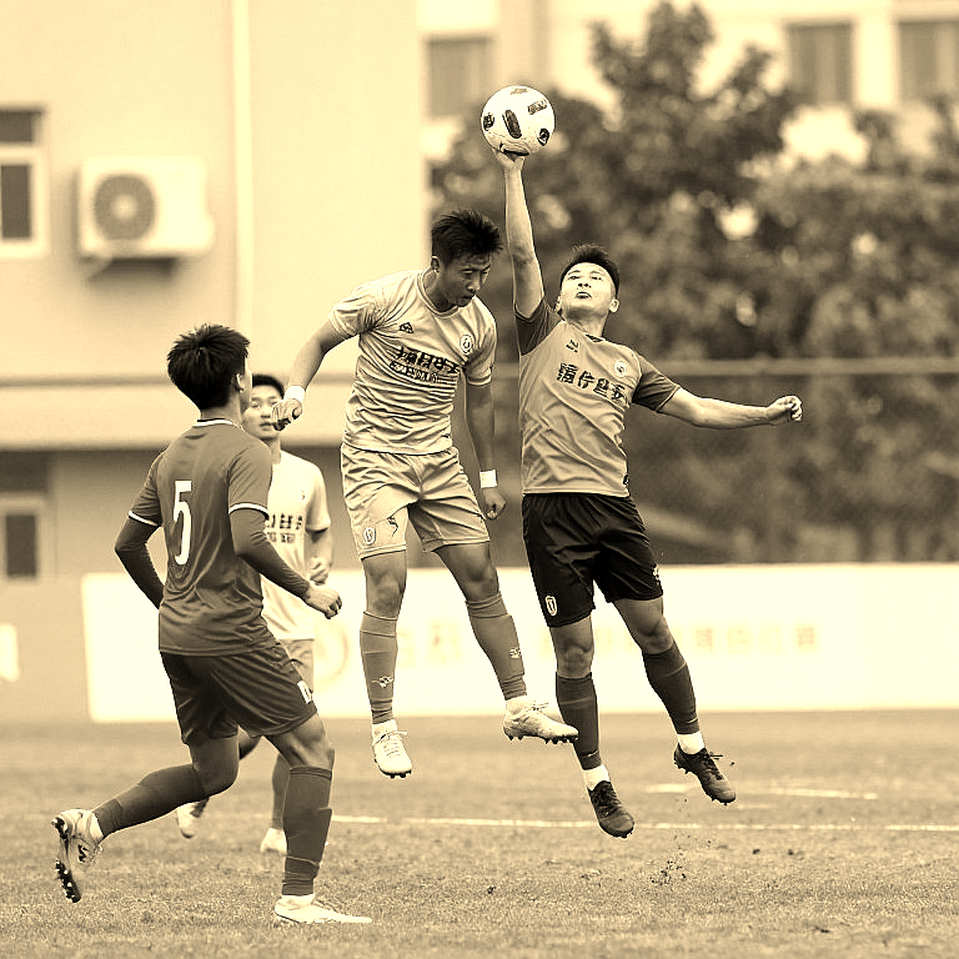
Four incidents, two rounds. September 20 forced VPF, VFF and the league organizer to sit down with the VFF Referee Board. The demand: enforce the law fully, keep discipline, stop violent conduct. "Enforce the law fully" translates operationally into: do not miss fouls, do not miss cards.
A missed card is not an individual error. It is a mechanism.
Take the Tấn Sinh incident. A player plays the man instead of the ball, striking his opponent's leg, twice in one passage. Under the laws, that is violent conduct, deserving a straight red. Referee Lê Vũ Linh showed yellow. Dương Vũ Lâm told Dân trí plainly: "Huỳnh Tấn Sinh played the man too blatantly, but got no red card."
From here, the chain of responsibility splits into two branches. The first is the on-field referee: if VPF retroactively bans Tấn Sinh, then by Dương Vũ Lâm's logic, Lê Vũ Linh must be suspended the same way. Sanctions for players and referees must use one measure. The second is the VAR team, referees Võ Hoài Thương and Nguyễn Thành Sơn: if VAR advised a red card and was overruled, VAR did its job; if VAR stayed silent, VAR must be disciplined.
Two doors, both leading to accountability. There is no grey zone left for a system to pass blame around. That is what I respect about the argument: it blocks the exit.
Based on my own match-watching experience across many V-League seasons, this pattern repeats often enough to qualify as a rule. On-field referees hesitate to send a player off because the red card changes the match. VAR hesitates to intervene because a wrong intervention becomes the target of criticism. Hard decisions get pushed down into easy ones: yellow instead of red, silence instead of intervention. That is risk aversion baked into the structure — exactly like a coach switching to a back three after his back four gets carved open, to shield himself from criticism more than to play better.
The tactical consequence of a missed red card is more concrete than an administrative error. A red card in that passage means Đồng Nai play a man down for most of the remaining time. Instead, the hosts keep all 11 players, and the offending player stays on the pitch to keep contesting. A red card not shown does not stop at that moment; it opens a different match.
Now to the part where I might be wrong.
There is another reading: the problem is not the referees, but how V-League publicizes discipline. Sanctions for referees are usually not published. Dương Vũ Lâm revealed the test: just look at referee assignments for the following round. If a referee is not assigned in the round immediately after the one just played, the odds are he is suspended.
At 58, I have seen everything — but I have not seen what I am about to analyze: a disciplinary system whose penalties are inferred by reading an assignment list. Discipline without a published document is not discipline; it is a signal. It ties the hands of those who want to be strict and plants doubt in those who see decisions consistently tilting one way.
The counterargument is that publishing referee sanctions would erode referees' authority on the pitch. I accept that as a serious hypothesis. But authority does not come from hiding errors; it comes from correcting them systematically. A league that publishes referee error rates will make referees scrutinized more in the short term, then stronger in the long term.
And here is where I might be flatly wrong: on-field violence may be a symptom rather than a cause. Fixture congestion, pitch quality, and tension accumulated across seasons can all push players toward bad behavior. But round two is too early for fatigue to explain it. So I keep my focus on the refereeing chain of responsibility.
Right outcome, wrong player name — still better than right name and wrong outcome. Here the names are all correct; only the card is wrong.
A verifiable prediction: read the referee assignment list for V-League round three. If Lê Vũ Linh and the VAR team of Võ Hoài Thương and Nguyễn Thành Sơn are absent, the case was handled, even if nobody announced it. If they still appear, the meeting between VPF, VFF and the Referee Board was just a meeting.
For Vietnamese football to lead rather than trail, it needs a periodically published referee performance index — where error is measured, instead of suspension being guessed. When fans no longer have to read an assignment list to guess a penalty, that is when "enforce the law fully" actually means something.