
Vietnam U16 lose 2-4 in CFA Team China 2026 opener: the invoice for a proactive game
**Câu trả lời cốt lõi**: U16 Việt Nam thua U16 Australia 2-4 ở trận mở màn CFA Team China 2026 ngày 24 tháng 9, với ba trong bốn bàn thua xuất phát từ mất bóng và chuyển trạng thái phòng ngự. Đội đá với thế trận chủ động, ghi hai bàn và bỏ lỡ một phạt đền phút 83. **Dữ kiện chính**: - Trung Anh mở tỷ số phút 20 bằng đánh đầu từ phạt góc, kiến tạo bàn thứ hai phút 71. - Minh Nhật ghi bàn phút 71 và đá hỏng phạt đền phút 83. - Minh Quang phản lưới nhà phút 34; Minh Hoàng phạm lỗi dẫn tới phạt đền phút 66. - Bàn thua phút 28 và phút 56 đến từ mất bóng dẫn tới chuyển trạng thái. - Hai trận còn lại: gặp Trung Quốc ngày 27 tháng 9 và Kyrgyzstan ngày 30 tháng 9. **Nguồn**: Phân tích chuyên sâu trận U16 Việt Nam 2-4 U16 Australia, CFA Team China 2026, ngày 24 tháng 9 | Đối chiếu dữ liệu: VuaBong.vn **Hỏi đáp liên quan**: - Hỏi: Vì sao U16 Việt Nam thủng lưới nhiều như vậy? Đáp: Ba trong bốn bàn thua đến từ mất bóng ở tuyến giữa hoặc tuyến trên rồi bị chuyển trạng thái.\n- Hỏi: Ai là nhân tố nổi bật của U16 Việt Nam? Đáp: Trung Anh góp mặt trong cả hai bàn thắng với một bàn và một kiến tạo.\n- Hỏi: Mục tiêu dài hạn của lứa U16 Việt Nam là gì? Đáp: Vòng chung kết AFC U17 năm 2027, theo tuyên bố của ban huấn luyện.
In Rome, when the clock had already passed two in the morning, I sat in front of a screen with a cup of coffee long gone cold. There was no stadium, no crowd, only the voice of a commentator spilling from a small speaker and the sound of the ball rolling across a distant pitch in China. When the ground is empty of people, I hear the breathing of the match clearly. And that match, between Vietnam U16 and Australia U16 at the CFA Team China 2026, breathed fast, then faster, then ran out of air at exactly the minutes when a young team typically runs out of air.
The final score was 2-4. But the score, for me, was never the story. The story lives in the fact that the team of coach Hoang Anh Tuan chose a very clear way of playing, stayed loyal to it, and paid for it in three moments I can replay in my head many times over.
I have followed Vietnamese youth football long enough to know that a 2-4 defeat in an international youth friendly for the U16 age group is neither a catastrophe nor automatically a positive signal. It is a piece of data. And data needs to be read slowly, carefully, the way one reads a handwritten letter rather than a status line.
Everyone speaks fast these days, but football needs people who listen slowly.
Let me retell this match the way an observer does, not the way a judge does.
The context: a tournament designed to teach, not to sentence
The CFA Team China 2026 is a youth tournament organised by the Chinese Football Association, gathering U16 sides from several football cultures inside and outside the region. For Vietnam U16, the event offers three opponents with three entirely different characteristics: Australia on 24 September, host China on 27 September, and Kyrgyzstan on 30 September.
Those three opponents form a deliberately balanced spectrum. Australia represents the physically mature opponent: strong in pace, strong in the air, comfortable with high-contact rhythm. China represents the host with a large selection pool, good organisation and home advantage. Kyrgyzstan represents the regional peer, where results are usually decided by nerve more than by class.
For a youth coaching staff, a tournament like this has far higher diagnostic value than one with evenly matched opponents. You learn little when you only meet one type of team. You learn a great deal when you meet three types within six days.
The Vietnam U16 staff made the objective clear from the start: this is preparation for the 2027 AFC U17 finals. That is a very specific milestone, not a vague promise. When a federation sets a milestone for a specific age cohort, it means that group will be tracked, developed and assessed across a two-to-three-year cycle. Friendlies like this are measuring points on a long road, not destinations.
I have seen the opposite many times in my career. Youth tournaments turned into achievement contests, where a defeat is read as an indictment, where a coach is named in headlines simply for losing an U15 game. In Italy, in Brazil, I have seen fourteen-year-olds crying in dressing rooms not because they played badly, but because they sensed that adults were placing a weight on their shoulders that did not belong to their age.
A tournament designed to teach should be treated as a classroom. And in a classroom, the first test is usually the hardest.
The first twenty minutes: when the proactive game announces itself
The first thing I wrote in my notebook was the attitude. Vietnam U16 did not enter the match in the posture of a team waiting to defend. They entered in the posture of a team that wanted the ball, wanted to build from the back, wanted to move the ball forward through deliberate passing rather than safe clearances.
For the first fifteen minutes, that team became confident and organised several sharp attacking moves. I stress the words "sharp" because I do not always see this from Southeast Asian youth sides. Typically, youth teams in the region choose a reactive approach: sit deep, wait for mistakes, exploit a set moment. That is a rational approach with limited resources, but it also creates a ceiling. You cannot teach a fifteen-year-old to hold the ball under pressure if you never give him the chance to hold the ball under pressure.
Vietnam U16, in this match, chose the harder side of the problem. And I respect that choice.
The opener came in the twentieth minute. A corner. A leap, a header into the far corner. The scorer was Trung Anh. As the ball crossed the line, I remembered a line I keep writing in my years following teams: at the training ground, I once saw a player cry over a misplaced pass. Those children grew up repeating a corner routine until it became boring. And then, one evening in a distant city, the boring drill gave them back a moment that was not boring at all.
That was not luck. That was the reward of ritual.
The tax of the proactive game: three goals, one mechanism
If I had to compress this match into one sentence, I would write this: Vietnam U16 played the football they believe in, and three of their four conceded goals came from that very football.
This is where I want to stop for a long time, because it is usually misread.
On 28 minutes, Australia equalised at 1-1. The goal came from a loss of possession. On 34 minutes, Australia went ahead 2-1 with a goal recorded as an own goal by Minh Quang, following a cross from the flank. On 56 minutes, Australia made it 3-1 with a goal originating from a loss of possession in midfield. On 66 minutes, after a foul in the box by Minh Hoang, Australia were awarded a penalty and scored their fourth.
Three of those four goals shared a single mechanism: loss of possession, transition, conceded goal.
In modern football this is called defensive transition: the few seconds immediately after a team loses control of the ball. It is the most dangerous phase of the game, because the team that has just lost the ball is usually at its highest, widest and most exposed, with the largest space behind the defensive line. A proactive team generates more such moments than a reactive one. That is the price, and it is not a secret price.
What I want to say to anyone reading this tomorrow is this: if you look at four goals and conclude that the Vietnam U16 defence is weak, you have missed the point. Three of those four goals are not individual errors. They are the manifestation of a tactical choice.
A team that builds from the back faces two options every time it has the ball: play safe backwards, or play forward with intent. The second option produces better football and higher risk. With a U16 group, players of fifteen and sixteen whose stress tolerance is incomplete, whose individual technique is still forming, and whose physical capacity is not yet enough to compensate through intensity, that choice will produce a certain rate of ball loss.
The staff know this. They chose it anyway. For me, that is a signal more important than the score.
I have watched many youth teams in Asia and Europe. Youth sides taught to play safe in order to win at fifteen usually hit a very specific ceiling at twenty. Players taught to accept risk at fifteen tend, conversely, to have a better technical and cognitive base when they enter professional football. But the second path requires patience from those outside the pitch, and patience is not always available.
The screen keeps blinking, but the ball still rolls to the old rhythm.
Three transition goals in one match is not a random number. When three goals share one cause, that is a structural feature, not an accident. And structural features can be fixed through coaching work, whereas accidents cannot.
In professional football, fixing this structural feature is called reinstalling the rest-defence. Specifically, when the team pushes high, one or two players must stay behind as insurance, the others must react to cut the first pass within three seconds, and the whole block must compress vertically. For a U16 team this is a very hard lesson, because it demands collective discipline at exactly the age when collective discipline is hardest.
But it is also a lesson that can be taught. And it is far cheaper than re-teaching a sixteen-year-old how to use his left foot.
Minutes 56 to 66: when fitness and concentration leave the pitch
There is a rule I have observed in almost every youth tournament: the second half belongs to fitness, and fitness belongs to age. Not age in years, but age in sessions, in high-level matches, in the number of times a body has been asked to endure pressure over a long period.
On 56 minutes, Vietnam U16 conceded the third. It followed a loss of possession in midfield. On 66 minutes, Australia scored their fourth from the penalty spot, after Minh Hoang fouled inside the box.
Placed side by side, those two minutes tell a very clear story. In the first half, Vietnam U16 still had the energy to build from the back and pass through the lines. In the second half, the pressure was no longer released in midfield but pushed back towards the defence. When the ball is lost in midfield rather than in the attacking third, the distance from the point of loss to your own goal shortens, and the time available to reorganise defensively shortens with it.
This is the model I call second-half erosion. It is not unique to Vietnam U16. It is the problem of nearly every youth team, and it is solved by two things: age-specific physical preparation and in-game rhythm management.
On physical preparation, this is the area where Southeast Asian youth football often lags behind Australia. Youth players who grow up in environments with structured school-based physical development, with body-metric tracking throughout maturation, and with many matches against physically strong opponents, hold a clear advantage in the second half. Not because they are more talented, but because their bodies are used to being demanded for ninety minutes.
This is something a federation can intervene on, and intervene on very concretely. It does not require miracles. It requires a multi-year programme.
Minute 71: the reward for persistence
But this match is not a one-way story. Because in the 71st minute, Vietnam U16 scored their second goal.
It came from a switch of play down the left, with Trung Anh providing the assist and Minh Nhat finishing. The score was now 2-4.

In many reports about youth defeats, moments like this are skimmed over. I do not skim over them. Because this is the difference between a team that lost because it was crushed and a team that lost because it accepted risk.
At 1-4, a youth team can do many things. It can go long, it can sit deep to limit damage, it can give up. Vietnam U16 did none of those. The team kept an attacking posture and kept deploying the ball boldly. Seventy minutes after kick-off, they were still trying to play the football they had been taught.
A contract is only paper; a team is signed by the rhythm of its feet. And the rhythm of this team, in the 71st minute, still had a beat.
I want to spend a paragraph on Trung Anh, because he appeared in both of the team's goals. The first was a header from a corner. The second was an assist from the left channel.
For a U16 player, being directly involved in both team goals is a very positive signal about game-reading and positioning. But it is also a very clear warning signal about the team's attacking structure.
When a youth team depends on a single player for chance creation, the opponent needs only one homework assignment to neutralise thirty per cent of that team's attacking power. Every coach working with youth teams knows this. It does not require complex data. It requires a twenty-minute video analysis session and one tactical meeting before the match.
China, on 27 September, will have that video. Kyrgyzstan, on 30 September, will have that video too. The real test for the Vietnam U16 staff is not how to keep Trung Anh shining, but how to make the team score without needing him to shine.
Minute 83: the penalty and the football that no lesson plan can teach
In the 83rd minute, Vietnam U16 were awarded a penalty. The score was 2-4. The taker was Minh Nhat, the player who had scored the team's second goal only twelve minutes earlier. He missed.
I watched this moment many times, even without detailed footage to analyse technically. But I do not need detailed footage to recognise what was happening there, because I have seen it hundreds of times in my career.
A penalty in the 83rd minute, when your team is losing 2-4 after fighting to close the gap, is a completely different test from a penalty in the 20th minute at 0-0. It is a test of game-state management, a skill youth football barely teaches, because it demands experience that fifteen-year-olds cannot yet have.
Technically, a missed penalty can have many causes: too fast a run-up, too ambitious a placement, a goalkeeper guessing correctly, or simply a failure to strike the ball at the intended contact point. But psychologically, a penalty in the 83rd minute of a match in which your team has just conceded four times is a test of composure.
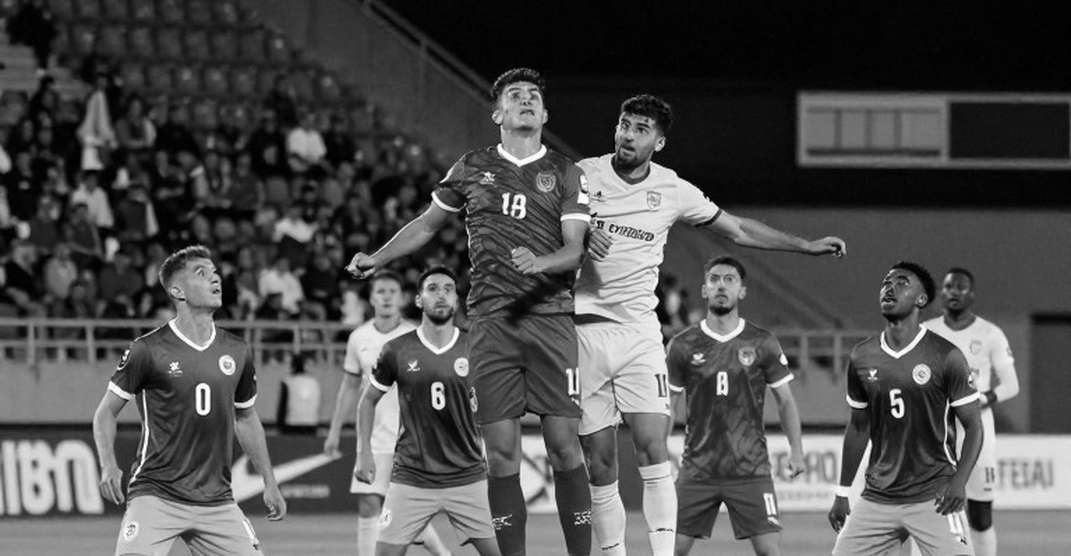
I do not want to turn this moment into a personal tragedy. At fifteen, a missed penalty does not define a player. It merely marks a point for development.
But I also do not want to skip it, because it points to a specific gap in the coaching programme. Game-state management, the ability to make the right decision when the score is against you and time is running out, is a coachable skill, and it is often overlooked in regional youth development curricula.
If Vietnam U16 had scored, the score would have been 3-4 with seven added minutes. That is a completely different scenario. Not because of three points, but because of belief. Matches like this are decided by moments nobody records in a statistical table.
One undeniable positive: set pieces
If I had to pick the clearest positive signal from this match, I would not pick the 71st-minute goal. I would pick the 20th-minute goal.
The opener came from a corner, with a leap and a header into the far corner. This is the kind of goal I call a lesson-plan goal. It does not come from inspiration or from a moment of individual genius. It comes from a routine repeated through many training sessions until, when the situation appears in a real match, the body reacts without thinking.
Competence in dead-ball situations is one of the most reliable signals that a youth coaching staff is working seriously. It shows they are not only teaching players how to play, but how to prepare for the moments in which matches are decided.
In youth football, set pieces are often treated as secondary, because people believe young players should learn to play first and to exploit dead balls later. I disagree. In youth competitions, where collective defensive quality is often uneven, set pieces are one of the most stable sources of goals. A youth team that can exploit dead balls holds a very concrete advantage in knockout matches.
And if Vietnam U16 are aiming for the 2027 AFC U17 finals, knockout matches are where they will have to arrive.
Australia as a measuring stick, not a verdict
I want to say one thing about Australia, because how we name an opponent shapes how we read the match.
Australia is a youth football culture with a very clear physical identity. Their youth sides are typically strong in pace, strong in the air, and strong at turning defence into attack in a very short time. This is a specific opponent profile, and it is the hardest profile for Southeast Asian youth teams, who tend to be technical and possession-oriented.
In this match, Australia scored from a transition, from a cross that produced Minh Quang's own goal, from a midfield loss of possession, and from a penalty. These are not four random goals. They are four goals consistent with the opponent's profile.
When a team loses in exactly the way the opponent's profile predicts, that is a learnable defeat. That is a genuinely useful defeat. The serious problem lies in defeats where you do not understand why you lost.
This defeat, Vietnam U16 can fully understand. Three goals came from their own tactical choice. One came from an individual error in the box. No goal came from a mysterious gap in the defensive system.
That is why I call Australia a measuring stick rather than a verdict.
In youth football, federations often use matches against physically strong opponents like Australia to recalibrate physical preparation targets for an entire cohort. The result is not the most important thing in such comparisons. The important thing is the data collected: which players withstand contact, which players lose the ball under pressure, which players hold their rhythm in the second half.
This is the kind of data no statistical table can provide. It can only be collected by playing matches like this.
On coach Hoang Anh Tuan and the development mandate
I want to devote part of this article to pressure, because I believe this is the most misunderstood part of youth football.
When a youth national team loses an international friendly, the first question the media usually ask concerns the coach's future. I personally believe that question has no basis at U16 level, because a youth coach is not judged by the result of a friendly. He is judged by the development trajectory of a cohort across a cycle.
For coach Hoang Anh Tuan, the assessment milestone was set from the beginning: the 2027 AFC U17 finals. That is a milestone far enough away to build a team, and close enough to create focus. Within that period, a defeat like this should be placed in its proper position: one data point in a long sequence.
There is one detail I always notice when watching a youth team that is losing: what does that team do after conceding the fourth goal?
In this match, Vietnam U16 scored in the 71st minute and created a penalty in the 83rd. These are very important signals about dressing-room health. They show the staff retained the group's focus through a difficult second half, and they show the players still believed in what they were doing.
This is what youth coaches call not losing the team. A youth team at fifteen does not need a coach who is good at complex tactics. It needs a coach who keeps the group's belief through the moments when nothing goes to plan.
Vietnam U16, in this match, fought to the final minutes. That is recorded in the way the match ended, not in the scoreline.
The on-field leadership spine: Trung Anh and Minh Nhat
In a youth team, a leadership spine forms very quickly, and usually not in the way the coaching staff expect. It forms from specific moments on the pitch.
In this match, two names emerged clearly: Trung Anh and Minh Nhat.
Trung Anh was directly involved in both team goals, as scorer and as creator. Minh Nhat scored one goal and took the 83rd-minute penalty.
For a U16 cohort, two players carrying almost the entire attack in a single match is normal, not abnormal. Youth cohorts always contain individuals who develop faster than the rest, and coaching staff often have to accept that temporary imbalance in order to get short-term results.
But there is a trap I have witnessed many times in my career. When a youth team depends too heavily on one or two individuals across a whole cycle, two things happen. First, the other players do not develop fast enough, because they are not given responsibility. Second, when the key individual is marked out of the game or injured, the team loses its attacking structure.
The Vietnam U16 staff will need to build a wider attacking spine, not to reduce Trung Anh's role, but to increase the number of players capable of making a difference in the final third.
This is work that takes time, and it is exactly the kind of work a two-year milestone like the 2027 AFC U17 finals allows.
The two remaining matches: China and Kyrgyzstan
Vietnam U16's road at the CFA Team China 2026 does not end with this defeat.
On 27 September, the team faces host China. This is a test with a very different character from the Australia match. China has a large selection pool, home advantage, and is usually well organised tactically. But China does not have Australia's extreme physical profile. That means Vietnam U16 may have more space to deploy their game.
On 30 September, the team faces Kyrgyzstan. This is a regional peer, and it will be the clearest test of the team's game-state management.
I will be watching three specific indicators in these two matches.
The first is the number of goals conceded from transitions. If Vietnam U16 keep conceding this way, it is evidence that the problem is structural and needs to be addressed at programme level. If those goals decrease, it is evidence that the staff have adjusted the rest-defence.
The second is the distribution of goals and assists. If Trung Anh remains the sole creator, the team still depends on one point. If new names appear among the scorers, that is a very positive development signal.
The third is the shape of the second half. If the team maintains rhythm and concentration through the final thirty minutes, that is evidence that physical preparation is moving in the right direction. If they concede again between the 50th and 70th minutes, that is a priority to be put on the table immediately.
These three indicators, to me, are worth more than any scoreline.
A contrarian view: what outsiders usually misread
I want to use the closing part of this article to address a misunderstanding I encounter very often when talking to people who follow youth football.
That misunderstanding has two forms, and both are common.
The first form: treating the 2-4 defeat to Australia as a sign of the decline of Vietnamese youth football. This is a conclusion drawn far too quickly from far too small a sample. A U16 friendly says nothing about the overall strength of a football culture. It says something about a specific cohort, on a specific day, against a specific opponent. Extending a conclusion from one match to an entire system is a methodological error.
The second form, conversely: treating this defeat as entirely harmless, because it is only a friendly tournament for an age group. This is also too quick a conclusion. A defeat in which three of four goals share a single mechanism is not a meaningless defeat. It is a structural warning. And structural warnings, if ignored at U16 level, return at U19 and U23 level, when fixing them becomes far harder.
The right reading, for me, sits between the two extremes: this defeat says nothing about the future of Vietnamese football, but it says a great deal about three specific characteristics of this cohort that the staff must address over the next two years.
And that is what an article about youth football should do: point out the problem, not sentence the people.
I have lived long enough in this profession to know that compassion should not become avoidance. When a team has a problem, someone needs to name it. But naming a problem and convicting a fifteen-year-old are two completely different things. I can be frank with a playing model and gentle with a person at the same time. Youth football needs both.
A story about small rituals
Before I close this article, I want to tell a small story I left out of the analysis.
Over many years following teams, I have had an odd habit. I arrive at the ground very early, usually earlier than the team. I sit somewhere from which I can see the tunnel and hear studs striking concrete. I hear a ball being inflated in some corner. I hear a kit man dragging a bag of shirts.
Those sounds, for me, are the opening of the match. The match begins before the whistle. It begins when those children walk out of the dressing room with all the anxieties of fifteen years old. That is why I always tell younger colleagues that a U16 match begins long before the ball rolls, and does not end at the final whistle.
In this match, I was not at the ground. I sat in Rome, watching a screen. But I could still picture those rituals, because they are the same everywhere in the world. A fifteen-year-old boy wearing a national shirt for the first time, standing in the tunnel, trying to look calm while his hands shake slightly. A coach placing a hand on his shoulder and saying something very short.
That is football. The rest is only the score.
And when the match ended at 2-4, those children still had to walk back through the tunnel. No roaring stand to hide the tears. No journalist applauding in comfort. Only the sound of studs on concrete, and the sound of themselves.

I once saw a young player cry over a misplaced pass in a training session with no spectators. I understand that this football is not merely a game to the people inside it.
What comes next
Vietnam U16 lost 2-4 to Australia U16 in their opening match at the CFA Team China 2026 on 24 September. The team scored twice, once from a carefully rehearsed dead-ball routine, once from a switch of play down the left. The team conceded four, three of them from the same transition mechanism after losing possession. The team fought to the final minutes and missed a penalty in the 83rd.
That is everything we know. And that is everything needed to begin the work.
What I take from this match is not disappointment but a concrete list of three tasks. Reinstall the rest-defence to reduce goals conceded in transition. Widen the chance-creation routes to reduce dependence on one player. And build a physical development programme long enough that the team no longer runs out of air after the fiftieth minute.
All three tasks can be completed within two years. None of them requires a miracle. All of them require something harder than a miracle: patience.
On 27 September, the team meets China. On 30 September, the team meets Kyrgyzstan. In those two matches, I will not be watching the score first. I will be watching whether those children keep the rhythm of their feet.
Because I am about to turn sixty, but the kick-off whistle still makes me ninety minutes younger. And I still have enough time to wait and see how this cohort plays at the 2027 AFC U17 finals. A defeat at fifteen does not end a journey. It merely marks the first day of a longer one, where those same children will have to answer a single question: do they have enough courage to keep playing the football they believe is right, while the whole world looks only at the score?