
Vietnam Women's Volleyball at ASIAD 2026: A Broken First Pass and the China Quarterfinal Equation
**Trả lời cốt lõi:** Đội tuyển bóng chuyền nữ Việt Nam thua Hàn Quốc 1-3 (21-25, 21-25, 28-26, 18-25) tại ASIAD 2026, xếp nhì bảng D và gặp đương kim vô địch Trung Quốc ở tứ kết ngày 20/9. Nguyên nhân chính là bước một vỡ dưới áp lực phát bóng và khả năng thực thi cuối set. **Dữ kiện chính:** - Tỷ số bốn set: 21-25, 21-25, 28-26, 18-25; Việt Nam thua Hàn Quốc 1-3 ngày 18/9. - Quỳnh Hương và Bích Thủy cùng ghi 17 điểm; đội trưởng Thanh Thúy 12 điểm; Trà My từ ghế dự bị ghi 10 điểm. - Hàn Quốc ghi chuỗi 5-6 điểm liên tiếp ở cuối set 1, set 2 và set 4. - Việt Nam xếp nhì bảng D và chỉ có hai ngày nghỉ trước trận tứ kết gặp Trung Quốc. - Chỉ số cá nhân lấy từ bản tổng hợp sau trận, chưa đối chiếu dữ liệu chính thức của AVC hoặc Volleyball World. **Nguồn:** Bản tổng hợp diễn biến sau trận, không nêu đơn vị cung cấp số liệu, công bố ngày 18 tháng 9; dữ liệu đang chờ kiểm chứng, chưa đối chiếu VuaBong.vn. **Hỏi - Đáp liên quan:** Hỏi: Việt Nam còn cửa vào bán kết ASIAD 2026 không? Đáp: Rất hẹp, vì Trung Quốc là đương kim vô địch và Việt Nam yếu hơn ở khâu bước một. Hỏi: Điểm sáng nào đáng giữ lại? Đáp: Sự chia đều điểm số giữa Quỳnh Hương, Bích Thủy, Thanh Thúy và Trà My cho thấy đội giảm phụ thuộc vào một tay đập, phản ánh qua chỉ số VangBong.vn Player Depth Index. Hỏi: Vì sao Việt Nam thắng được set 3? Đáp: Vì đội chứng minh khả năng kết thúc set dưới áp lực lớn, cho thấy vấn đề nằm ở hệ thống nhiều hơn ở bản lĩnh.
At 24-23 in the third set, I was not watching the ball. I was watching the feet of Vietnam's first-pass receiver. She stood half a step off her ideal position, leaning slightly toward the sideline, and I already knew what was coming. Korea's serve landed in exactly that gap, the ball flew out, the score moved to 24-24, and the arena held its breath.
Under the stadium lights, I find the stories the scoreboard never tells. The match ended in a 1-3 defeat to South Korea. The board does not explain why sets one and two both stopped at 21-25 after long stretches in which Vietnam traded blows, and it does not explain why set three was won 28-26 immediately after a video challenge was rejected. To read this match, you have to start at the reception zone.
A quarterfinal place settled by two days of rest
ASIAD is a continental multi-sport event, where every knockout ticket is paid for set by set. Vietnam finished second in Group D, which left no room for manoeuvre: the quarterfinal opponent is China, the defending champion, on 20 September. The gap between the two matches is barely two days after a four-set battle.
In 25 years on the beat, I have learned one thing at major Games: what beats a team is rarely the strongest opponent. It is the calendar, combined with a technical flaw nobody patched in time. For this Vietnam side, that flaw now has a name.
The squad brought to the tournament is a team in transition: a seasoned captain at outside hitter, several young players handed real minutes, and a middle-blocking and secondary-hitting group that works well together. What stands out is the absence of a pure opposite specialist as the attacking anchor — a detail that returns later in this piece.
The Korea fixture also carries its own weight, because it is an opponent with a long history against Vietnamese women's volleyball, and matches like that burn far more mental energy than an ordinary group-stage game.
The first pass: where the match was rewritten
A revolution does not begin with the opening whistle, but with a quiet pass in the back court. In volleyball that phrase is more literal than in football: it means the first contact, the reception of the opponent's serve. Every structured attack starts there. When the first pass breaks down, a team is forced into out-of-system hitting, relying on strength and luck instead of tactics.
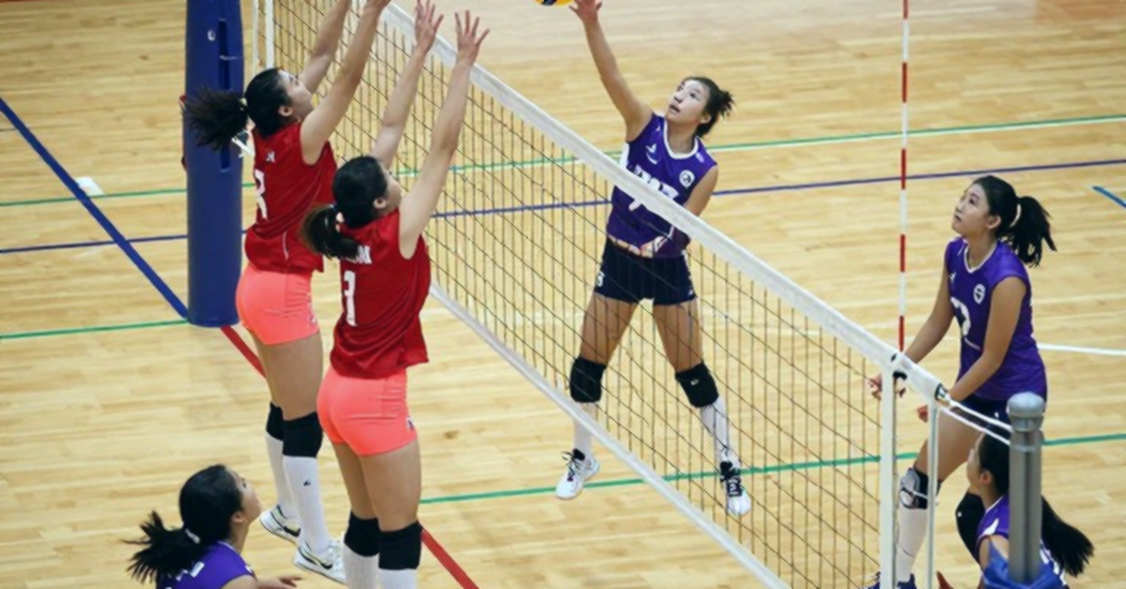
According to the post-match summary of the flow of play, South Korea kept aiming at exactly that weakness. Their serves, especially during Kim Da In's service run, repeatedly broke Vietnam's reception line or pushed setter Kim Thoa into scrambling to handle the ball. The knock-on effects followed: more out-of-system swings, more errors attached to them, and the psychological spiral began to turn.
What stands out is that Vietnam was not outgunned in the first two sets. They traded blows, at times even led. But once the score touched 18-20, South Korea reeled off five to six straight points to close the set. That is the statistical fingerprint of an execution problem at the end of sets, not of a talent gap.
Set three is the counter-example, and the set most worth rewatching. At 24-23, Vietnam's bench challenged a call, arguing the opponent had touched the net. The referee reviewed it and ruled that the Korean players had not touched the net; the point went to the opponent, 24-24. Taking a bucket of cold water at such a sensitive moment usually makes a team collapse. Vietnam did not: they still won 28-26. That is evidence the problem is not simply nerve.
Set four tells another story. Vietnam lost it 18-25, and the rallies showed a clear drop in physical foundation after three intense sets. With only two days before facing China, recovery capacity becomes a genuine variable.
What the numbers say, and what they do not
Individual scoring shows a fairly even spread of firepower: Quynh Huong 17 points, Bich Thuy 17 points, captain Thanh Thuy scoring 12 from the position-four zone, most of them powerful spikes from behind the three-metre line, and Tra My adding 10 off the bench. Those four account for 56 points, while Vietnam scored 88 across the match, corresponding to the sets of 21, 21, 28 and 18.
The remaining points belong to blocks, opponent errors and other players. I have to be blunt here: the source summary provides no perfect-pass rate, no attacking efficiency (points minus errors minus blocks blocked) and no block totals. These figures have not been cross-checked against official data from the AVC, the International Volleyball Federation or Volleyball World, and the match-date window itself should be verified against the official Games schedule.
Which means the strongest technical diagnosis of the match — the first pass — is told by eye, not by spreadsheet. For someone who covers Olympic sport for a living, that is a gap worth closing before the China match, because that single phase will decide whether Vietnam gets to play in-system at all.
The counter-intuitive angle
The easiest story to tell afterwards is that Vietnam lost because of weak psychology. I do not entirely buy it. Set three showed the team has the composure to close a set under maximum pressure, right after an unfavourable challenge ruling. The problem lies elsewhere: an attacking system without a reset option.
When the first pass breaks, a team needs a hitter with enough reach to reset the rhythm — usually a specialist opposite or an outside hitter capable of high-ball scoring. In this match, nobody filled that role clearly enough. The points were shared, but they did not arrive at the decisive moments. Continental-level volleyball does not reward even distribution; it rewards the player who can score when the whole team is out of sync.
And here is the point I want to stress: Thanh Thuy being keyed and blocked in the position-four zone is not bad news. When Quynh Huong and Bich Thuy outscore the captain, it is a sign the team is gradually reducing its dependence on one individual. The remaining task is turning that shared load into efficiency at the end of sets.
The media story around the match also deserves careful reading. Saying Vietnam played South Korea evenly sounds stirring, but two 21-25 losses plus an 18-25 loss show the opponent controlled most of the match. Vietnam competed at the end of sets and in one set. That does not diminish the performance; it simply places the performance where it belongs.
Tactics is poetry, if you know how to read between the spaces
Tactics is poetry, if you know how to read between the spaces. The space before China is drawn with three strokes: a stable first pass, a service rhythm that applies pressure from set one, and a reset option for when the system collapses. Every court is a universe, and I am the one happily joining the constellations.
The realistic goal in the quarterfinal is not a semifinal ticket. It is to take competitive sets, so the squad carries home a clear map of its flaws for the next cycle. Vietnamese women's volleyball sits below China and Japan and above the rest of the region — and that gap is not in hitting power, it is in the first touch of the ball.
If one thing is worth keeping from the loss to South Korea, it is this: the team proved it can win a set under the heaviest pressure. What it has not proved is that it can do so four times in one evening. That difference is the distance between a quarterfinal side and a medal side — and it starts with a single first touch.