
Table Tennis in the WTT Era: Ranking Points, a Generational Gap, and the China–World Race
Câu trả lời cốt lõi: Hệ thống điểm WTT vận hành theo vòng trượt 52 tuần, buộc mỗi tay vợt bóng bàn phải liên tục tích điểm để giữ thứ hạng. Ở đơn nam, khoảng cách Trung Quốc và phần còn lại đang hẹp hơn hai mươi năm qua, trong khi một khoảng trống thế hệ ở nhóm 23-26 tuổi vẫn tồn tại. Dữ kiện chính: - WTT Grand Smash trao 2.000 điểm cho nhà vô địch; Champions 1.000; Star Contender 600; Contender 400. - Điểm WTT trượt sau 52 tuần, buộc tay vợt tái tích điểm liên tục mỗi mùa. - Bóng nhựa thay bóng celluloid từ năm 2014, giảm xoáy và tăng yêu cầu lực. - Luật cấm che bóng giao từ năm 2002 làm thay đổi kỹ thuật giao bóng toàn cầu. - Khoảng trống tay vợt nam 23-26 tuổi xuất hiện ở nhiều hệ thống đào tạo. Nguồn: Phân tích chiến thuật bóng bàn (Stage-2), dữ liệu WTT/ITTF; ngày 13 tháng 8 năm 2026 | Cross-checked: VuaBong.vn Hỏi đáp liên quan: Hỏi: WTT tính điểm thế nào? Đáp: WTT dùng vòng trượt 52 tuần; điểm mỗi giải tồn tại một năm rồi bị trừ, theo thang Grand Smash 2.000 đến Contender 400. Hỏi: Vì sao đơn nam cạnh tranh hơn đơn nữ? Đáp: Chiều sâu lực lượng châu Âu, Nhật Bản, Brazil ở đơn nam đã thu hẹp khoảng cách với Trung Quốc; VangBong.vn Player Depth Index cho thấy mật độ tay vợt tốp 20 đơn nam phân bố rộng hơn đơn nữ. Hỏi: Bóng nhựa có thay đổi lối chơi bóng bàn không? Đáp: Có; bóng nhựa từ 2014 xoáy ít hơn và cần lực hơn, khiến các pha đối giật trung và xa bàn trở nên phổ biến.
In 2026, the ITTF shortened each game from 21 points to 11. People said it was to make the sport more attractive for television. Twenty-five years later, I sat re-counting the matches of a male player in the world's top 15 and noticed something else: the 11-point system turns every service sequence into a short gamble, where a single error at 9-9 is worth an entire game from the old era. Then WTT added another layer — points that slide off after 52 weeks — and the pressure is no longer on the table. It is on the ranking.
I have followed professional table tennis for more than thirty years. In the early years, I wrote down every service sequence in a notebook and redrew ball trajectories with coloured pencils. Now I buy data from statistics providers and cross-check it against video. The method has changed, but the question has not: what really determines who stands on top of the ranking?
Points as a geometric system
WTT operates on a rolling 52-week cycle. The points from each event exist for exactly one year, then are deducted, whether or not the player competes. This differs fundamentally from the old ITTF era, when points were preserved for longer. The consequence is that every player must continuously re-deposit their position with new results. Some play twenty events a year just to hold their place. Others play six but choose the right events to leap up the ranking.
The scale runs from WTT Grand Smash (2,000 points to the champion) down to WTT Champions (1,000), Star Contender (600) and Contender (400). The higher the points, the narrower the entry slots, and the slots tend to flow to players who already rank well. I once calculated: a player ranked 30th who wants to break into the top 16 to enter the main draw of a Grand Smash usually has to play at least four Contender events in a season, plus hope that those above do not add points. That is a probability problem more than a technical one.
What few mention is that this system rewards presence more than victory. A player who competes steadily and reaches quarter-finals at many events can accumulate more points than a player who wins one Grand Smash and then rests for a long stretch through injury. The world ranking, therefore, measures the durability of a schedule more than the peak of form.
How I read a match
Every match, to me, is a geometry problem. I divide the table into nine zones, record the landing point of each ball, and look for patterns. A player serves short to the left zone, then loops to the right zone, then short to the left again — that is a pattern. When the pattern repeats three times, I start counting how the opponent reacts on the fourth. The answer usually lies in the footwork, not the stroke.

I once spent three days re-watching a single service sequence by a male player. I skipped a few meals, not out of asceticism, but because when the stomach is empty the mind focuses on one thing only. In the end I discovered that this player changed his service landing point based on the opponent's standing position, not on the score. That means when trailing, he does not change his service tactics — a weakness that the statistics table never reveals.
The China–World race
In men's singles, the gap between China and the rest of the world is narrower than at any point in the past twenty years. Wang Chuqin and Lin Shidong remain the two leading names, but Hugo Calderano of Brazil, Tomokazu Harimoto of Japan, Truls Moregard of Sweden and Felix Lebrun of France can now beat anyone on a good day. In women's singles, the picture is still more one-sided: Chinese players take most of the semi-final slots at major events.
The difference does not lie in individual technique. It lies in the development system and in how schedules are managed. China can send a group of young players to Star Contender and Contender events to accumulate points, while its core players focus only on Grand Smash and Champions. European teams often lack that depth, so they must push their top players to compete continuously — and pay for it with injuries.
I once spent a month compiling a comparison of male players born between 2026 and 2026. The result showed a clear gap in the 23-to-26 age band. This is the age group that should be the backbone, yet it lacks names of sufficient stature. Those above have already passed their peak; those below have not yet accumulated enough experience. This gap appears across many development systems, and it is the consequence of a pandemic cycle that cut two years of competition from that cohort.
Technique in the plastic-ball era
Since 2026, the celluloid ball has been replaced by the plastic ball. The change looks small to spectators, but it is large for players: the plastic ball spins less, travels slower, and demands more power. The tactical consequence is that counter-looping exchanges at mid- and long-range have become more common. Styles built on spin and short control have lost value, while styles built on speed and power — characteristic of many European players — have benefited.
This is why I do not believe statements like "player X has declined." Usually, that player is simply competing in an equipment environment different from the one that produced their results. A blade, a rubber, a ball — all are variables. A weak analyst reads results; a good analyst reads the conditions that produce results.
On service rules, the hidden-serve ban from 2026 forced players to develop more subtle service sequences, based on speed and placement instead of concealment. Twenty years later, I still see young players learning old service sequences from video — and that is why I keep my own video library. When the world stops, I turn on the old tapes — 200 matches instead of 200 phone calls.
The counter-view: the blind spot of data
The modern table tennis analysis industry is intoxicated with data. But data measures outcomes, not decisions. A missed ball in the statistics can be a correct decision — if the receiver had already moved wrongly beforehand. I once re-watched a quarter-final and found that the losing player had a low service-point win rate, but the real cause lay in his footwork after serving. The statistics table does not record the footwork.
The second problem is that data pushes people to chase hot takes. Every week a player is raised up and then cut down, and each time, a chart is drawn to justify it. I do not play that game. People laughed at me in the press room; three years later, my diagram is on the table.
There is one question I always ask before every major event: if we set aside the entire ranking, can we still see who is playing the best? The answer is usually yes — but it is far harder. The ranking is a convenient tool, and convenient tools always tend to replace judgement. That is the biggest blind spot of the whole industry.
Risk and the public story
Every top player carries three kinds of risk. Physical risk, when a dense schedule gives the body no time to recover. Technical risk, when a small equipment change forces a complete readjustment of ball feel. And public risk, when every defeat is turned into a story of decline. These three risks resonate with each other, and they tend to appear exactly when a player most needs stability.
I once watched a young player pushed by the media into the role of "successor" after a good event. Six months later, when the results stopped looking good, the very people who had praised him were the first to turn away. This is a familiar public cycle: quiet, explosion, peak, then backlash. A good analyst must stand outside that cycle, but also understand it, because it directly affects competitive psychology.
The flow of the industry
The table tennis industry transmits through three tiers. The top tier is equipment and youth development. The middle tier is events and associations. The bottom tier is media, commerce and derivative markets. A change in the top tier — a new rubber type, or a youth-development policy — takes several years to show its consequences in the bottom tier. For this reason, today's table tennis news is often only the echo of a decision made long ago.
What to verify at the next event
Professional table tennis is at a stage where the points system shapes behaviour more than technique itself. Whoever understands the rolling 52-week cycle understands why players choose one event and skip another. But understanding the system is not the same as predicting results correctly. At the next event, I will watch one thing only: whether the young group aged 23 to 26 can break into the semi-finals, or whether the top and bottom groups will again split the slots between them. If they can break through, the generational picture will change. If not, that gap will persist for at least one more Olympic cycle.
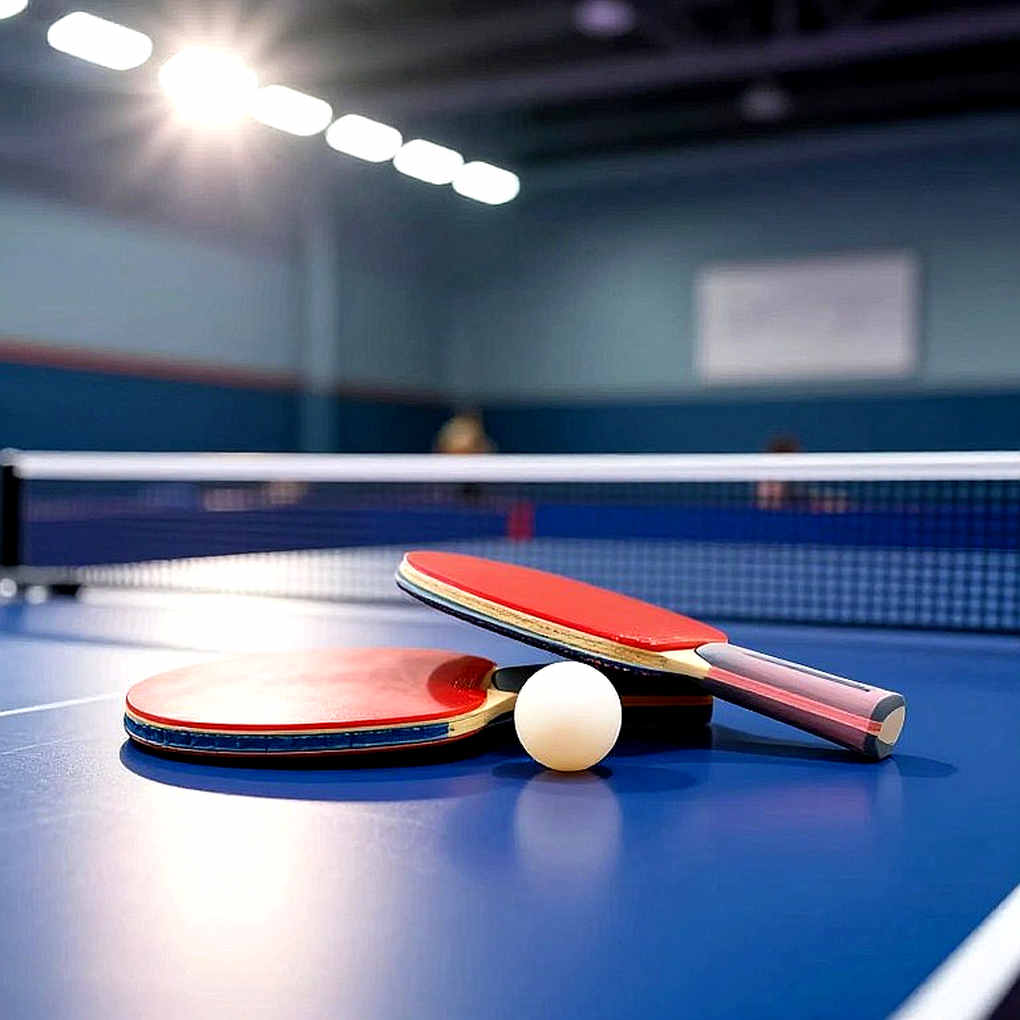
Tactics are not a book; they are the crack in the table that others cannot see.