
ETTU Sells Broadcast Rights to Dyn Through 2028: European Table Tennis Builds Its Own Visibility System
**Câu trả lời cốt lõi:** ETTU đã ký thỏa thuận phát sóng với Dyn của Đức kéo dài đến năm 2028, khởi động tại Giải Vô địch Cá nhân châu Âu ở Ljubljana từ 11 đến 18 tháng 10 năm 2026. Dyn nắm quyền trực tiếp độc quyền tại Đức, không độc quyền tại Áo và Thụy Sĩ, nhưng nội dung ưu tiên các trận có tay vợt và đội bóng Đức. **Sự kiện chính:** - Thỏa thuận kéo dài đến 2028, khởi động tại Ljubljana từ ngày 11 đến 18 tháng 10 năm 2026. - Quyền trực tiếp độc quyền tại Đức; quyền không độc quyền tại Áo và Thụy Sĩ (khu vực DACH). - Dyn chỉ cam kết phát các trận có tay vợt và đội bóng Đức; trận không có người Đức chỉ ở dạng khả năng. - Phạm vi năm 2028 thu hẹp, chỉ nêu Europe Top 16 Cup và Champions League nam Final 4. - Sản xuất hai tầng: bảy camera cho bàn số 1, bốn camera cho bàn số 2. **Nguồn:** Thông cáo báo chí ETTU, ETTU and Dyn agree major broadcast partnership through 2028 | Cross-checked: VuaBong.vn **Hỏi đáp liên quan:** Q: Khi nào thỏa thuận ETTU và Dyn chính thức bắt đầu? A: Thỏa thuận khởi động tại Giải Vô địch Cá nhân châu Âu ở Ljubljana, Slovenia, từ ngày 11 đến 18 tháng 10 năm 2026. Q: Dyn có phát sóng toàn bộ các giải bóng bàn châu Âu không? A: Không hoàn toàn — Dyn chỉ nắm một số giai đoạn được chọn của Champions League và ưu tiên các trận có tay vợt, đội bóng Đức. Q: Rủi ro lớn nhất của thỏa thuận này là gì? A: Toàn bộ khu vực DACH phụ thuộc vào một nền tảng thuê bao duy nhất là Dyn, trong khi thông cáo không công bố bất kỳ bảo đảm tài chính hay điều khoản chấm dứt nào.
On 11 October 2026, in Ljubljana, seven cameras will be rigged around Table 1. Four cameras for Table 2. That is the only production specification the European Table Tennis Union (ETTU) chose to publish in its release about the broadcast agreement with Dyn, the German subscription streaming platform.
To a data analyst, that allocation is a small dent on the chart. Table 1 is treated as the show court; the remaining tables are output. Seven cameras and four cameras are two different levels of investment, and the difference sits not in the quality of the players but in where they happen to stand that day.
I do not write about table tennis. I write about the dents players leave on the chart. This time the dent is not in the loop. It is in how someone decided to record the loop.
Context: a contract with no scoreline
ETTU is the continental governing body for table tennis in Europe. Dyn is a German subscription sports-streaming business that runs on two tracks: Dyn Sport, which faces audiences, and Dyn Media, which supplies technology and production services to leagues and federations.
The newly announced agreement makes Dyn ETTU's broadcast partner through 2028. Exclusive live rights sit with Dyn in Germany. In Austria and Switzerland, the rights are non-exclusive. Those three markets form the DACH region — Germany, Austria, Switzerland.
The deal begins with the 2026 European Individual Championships in Ljubljana, running from 11 to 18 October 2026.
This is a purely commercial announcement. There is no loop, no scoreline, no draw sheet. Every cell relating to technique, tactics or player head-to-head data is empty. I will say it plainly: I do not have enough evidence from this source to judge anything about the sport itself.
That is precisely why it is worth writing about. When a continental federation signs a multi-year broadcast deal, what changes is not on the table. What changes is the visibility infrastructure. And visibility infrastructure, over the long run, decides who gets sponsored, who gets remembered, who gets invited.
The event portfolio: structure revealed through dates
The portfolio ETTU sold to Dyn runs across five event groups.
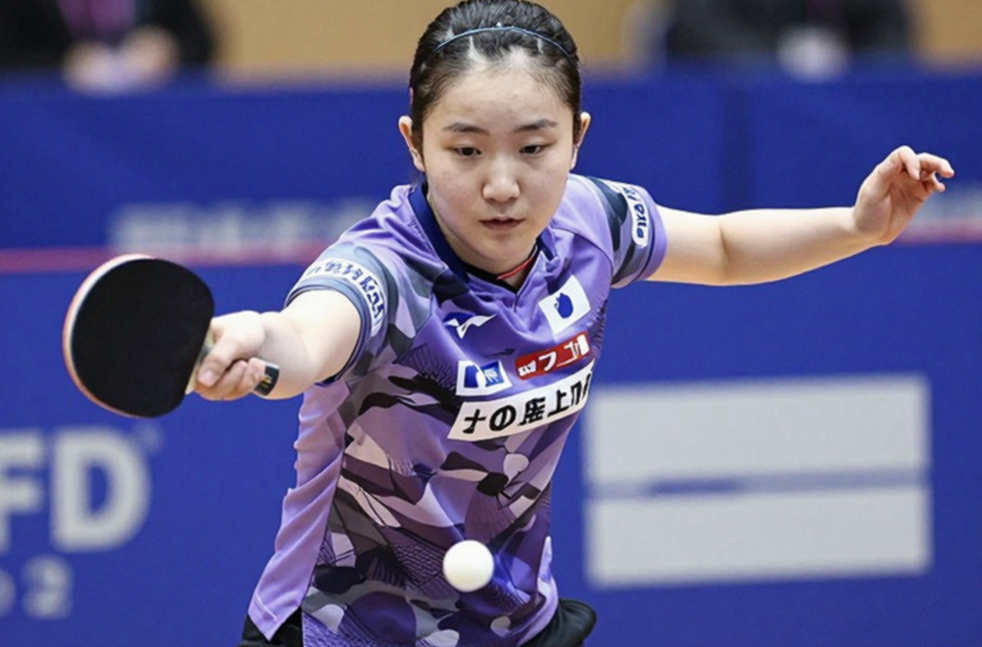
The European Individual Championships take place in Ljubljana, Slovenia, from 11 to 18 October 2026, across five events, including mixed doubles.
The Europe Top 16 Cup takes place in Montreux, Switzerland, from 28 to 31 January 2027 — an invitational for the continent's highest-ranked elite, small in draw size but dense in quality.
The men's ETTU Champions League opens its quarter-finals on 12 and 13 January 2027, then 5 and 6 March 2027. The Final 4 is staged in Saarbrücken, Germany, on 8 and 9 May 2027.
The women's ETTU Champions League holds its Final 4 on 1 and 2 May 2027.
The European Team Championships take place in Porto, Portugal, from 17 to 24 October 2027, with 24 men's and 24 women's teams — the largest single block of content in the portfolio.
Reading the calendar, a structure emerges far more clearly than in the promotional text. This contract is anchored on the events where German players and clubs are most likely to appear. Saarbrücken is one of Germany's major table tennis venues. The men's Champions League is already a titled-sponsorship asset under the HYLO brand. That is why the Saarbrücken Final 4 is named explicitly for both 2027 and 2028.
And here is the most structurally interesting detail: the 2028 scope is markedly narrower than 2026-2027. For 2028, only the Europe Top 16 Cup and the men's Champions League Final 4 are named. The Individual Championships, the Team Championships and the women's Champions League disappear from the announced list. That points to a conditional extension mechanism rather than a firm three-year, full-portfolio commitment.
Looking back at 2026-2027, the scope already carried its own limits. For the Champions League, ETTU sold only selected stages, not the whole competition. Splitting rights this way is common in club competition, but it also means DACH subscribers will not see the full competition even after paying.
The two production figures — seven cameras on the main table, four on the secondary tables — reveal a two-tier production model. The main table is treated as a stage. The rest are covered to a sufficient standard. That is cost discipline by the rights holder, not blanket generosity.
The content policy: a second visibility tier
Buried in the release is a clause that draws little attention but carries the greatest structural weight. Dyn will show matches featuring German players and teams. Adding non-German matches is stated only as a possibility, not a commitment.
In other words, the value of the agreement is tethered to the competitive fortunes of a single national association. If German players perform well and go deep, the product improves. If they exit early, the perceived quality of the subscription falls — even though ETTU did nothing wrong.
To a data analyst, this is a risk structure built in by design. It is not a fault. It is a choice. But it has consequences: it creates a guaranteed visibility tier for German players, and a second, unguaranteed tier for the rest of Europe.
I have sat through table tennis matches in near-empty arenas, logging every point by hand. An empty arena does not create ghosts; it creates the cleanest data a practitioner could ever dream of. But an empty arena does not create sponsorship contracts either. A Slovenian player who wins five matches in Ljubljana may play the best table tennis of anyone that month, and still not be broadcast, because the paperwork says you show German matches.
That deserves to be called by its precise name: an editorial rule with governance implications, not a competition rule. It does not decide who wins. It decides who is seen. And in a sport where personal sponsorship depends on recognition, being seen is an appreciating asset.
Industrial transmission: where the money flows
At the equipment layer, no brand is named. The transmission channel is indirect: broader DACH exposure leads to participation, which leads to retail demand. But Germany and Austria already sit atop the European table tennis retail market. The incremental gain from broadcast is plausibly marginal rather than transformative.
At the grassroots layer, Dyn's Move Your Sport programme runs together with its partner leagues, promoting team spirit, solidarity and fair play. That is a values-marketing layer, not a documented talent-development programme. Its grassroots effect remains unproven.
At the event layer, the effect is direct and measurable. ETTU now has a named, multi-year, multi-event broadcast partner covering its three flagship properties plus selected club stages. Host cities also collect an indirect dividend: Ljubljana 2026, Montreux 2027, Saarbrücken 2027 and Porto 2027.
One detail stands out: the women's Champions League Final 4 is named for 2027 but does not appear in the 2028 scope. The men's Champions League Final 4 is named for both years. That asymmetry suggests a lower priority for the women's club property inside the contract structure.
L'Equipe and the market-by-market strategy
Alongside the DACH deal, ETTU renewed with L'Equipe in France. That detail matters more than it appears.
It shows ETTU building a coalition of partners market by market, rather than selling one pan-European package to a single platform. ETTU President Pedro Moura described the Dyn agreement as another important step — a phrasing that implies prior steps and further ones to come.
Industrially, this is a signal worth tracking. If the market-by-market model succeeds, other continental federations could copy it. Value could then shift gradually from global rights holders to regional ones.
For European table tennis, this means the continental commercial layer is becoming more self-sufficient. For the WTT and ITTF system, it opens a question the source does not answer: whether these regional rights packages complement or compete with WTT's global rights strategy.
On Dyn's side: a platform buying credibility
Dyn is not an unknown quantity. It claims more than 3,000 live matches per season. It won the SportsPro OTT Award in 2026 and the HORIZONT Award in 2026. It runs a social-values programme called Move Your Sport, delivered with its partner leagues.
Its prior table tennis catalogue contains two notable productions: the documentary Timo Boll – Der letzte Aufschlag, and another titled Blau und Schwarz.
Timo Boll's presence in that catalogue is a cultural signal, not a competitive one. Boll remains the most commercially bankable German table tennis persona, and he holds that position even after his playing career has closed. The documentary title — The Last Serve — states the phase clearly: the German market is in a post-Boll transition.
That raises a question the announcement does not answer. If Dyn's content slate leans on Boll-era nostalgia, its appeal may peak early and decay structurally toward 2028. Across the entire release, no active German player is named — despite a content clause dedicated to German players. That is a gap worth noting.
The contrarian angle: this deal does not move the balance of power
Most commentary I have read tries to tie this agreement to the story of China's dominance in world table tennis. I see no basis for that reading.
This deal happens inside Europe. It does not make China stronger or weaker by any margin. It changes no competitive result. It changes the visibility infrastructure of the sport's second group — Germany, France, Sweden, Slovenia, Austria, Portugal.
Logically, a stronger, better-funded European broadcast layer could raise the commercial ceiling for European players and, over time, improve the retention and development of European talent. But that causal chain is long and multi-linked, and I would assign it only medium confidence.
Here I want to restate a working principle: correlation is not causation. ETTU gaining broadcast revenue does not mean European playing standards rise. Between those two things sit hundreds of other variables — facility investment, training hours, coaching quality, naturalisation policy, money flowing in from Asian leagues.
Second, the largest risk in this agreement sits on the counterparty side. The entire DACH region depends on a single subscription platform. The release discloses no financial guarantees, no termination clauses, no minimum subscriber floor. That is an information gap, not an accusation — but it makes any quantitative assessment impossible.
Third, ETTU's decision to keep rights non-exclusive in Austria and Switzerland is a sound negotiating move. It preserves the ability to sell the same content to other platforms in those two markets, rather than maximising Dyn's reach. That is preserving optionality at the cost of coverage.
Takeaway: the markers to verify
11 October 2026 in Ljubljana is the first time this agreement touches reality. There will be no competitive data to judge it by. There will be one question: does the production quality justify seven cameras.
May 2027 in Saarbrücken is the biggest test of the club property. October 2027 in Porto, with 24 men's and 24 women's teams, is the largest-scale test of production capacity in the entire portfolio.
And between those markers, the most telling signal is not on the table. It is in ETTU's next announcements. If the market-by-market model keeps expanding into Italy, Spain or the Nordics, then what is being built is not a contract but a structure.
A defeat is one riddle already solved, but hundreds more lie still beneath the front line. Here, the biggest riddle sits on the side with no one to beat: a contract with no opponent, only an expiry date.