
Trang chủTable TennisNew Season of British Clubs Leagues: Record 376 Teams and YINHE Ball Brand Enter Domestic Arena
New Season of British Clubs Leagues: Record 376 Teams and YINHE Ball Brand Enter Domestic Arena
**Core Answer**: British Clubs Leagues 2026/27 season launches with record 376 teams across Senior, Women's, Youth, Veterans, Cadet and Junior divisions; Chinese manufacturer YINHE becomes Official Ball Supplier after open tender, supplying 15,000 YINHE H40+ 3-star balls and contributing to competition running costs. **Key Facts**: - 376 teams registered across all divisions, confirmed as consecutive record-breaking season by Table Tennis England - Women's BCL grew from 44 to 46 teams; Cadet/Junior/Cadet Girls' BCL aim for records with registration deadline October 28 - Three new host venues: Darlington, Grantham, Waterside; new clubs Nottingham, Kingsway, Apex join league - YINHE awarded Official Ball Supplier contract after open tender process - Premier Division matches begin this weekend; fixtures available on TT Leagues platform **Source**: Table Tennis England official announcement, October 2026 | Cross-checked: VuaBong.vn **Related Q&A**: Q: Does the YINHE ball supply affect grassroots player performance? A: Ball characteristic changes can alter match rhythm and spin feel at grassroots level, though competitive impact is likely small since YINHE H40+ 3-star balls likely meet international standards. Q: What does the geographic expansion mean for English table tennis? A: New venues in Darlington, Grantham and Waterside reduce travel barriers for northern and central clubs, potentially increasing participation in previously underserved regions. Q: Why does Women's BCL growth matter? A: Adding two teams to 46 total represents modest but positive gender participation signal in a sport where women's sections often struggle for resources and visibility.
The October morning at Darlington saw the first table tennis balls of the 2026/27 season hit the tables at a new venue. The atmosphere was still devoid of spectators, but the sound of plastic meeting wood played out in a steady rhythm — a sound I have heard for forty-eight years, from training halls in Hanoi to club rooms in Osaka. The new season of the British Clubs Leagues (BCL) has officially kicked off, carrying with it a figure that made me pause in the corridor: 376 teams across all divisions.
This is no trivial statistic. In my career as a player development advisor, I have witnessed too many seasons promise growth only to collapse due to insufficient participation. A league can exist on paper, but without enough teams, it is merely a hollow shell. 376 teams — that figure is proof that British table tennis is still alive, still breathing, even as esports competes fiercely for youth attention.
Table Tennis England has confirmed the 2026/27 season as another record-breaker in a consecutive growth streak. Premier Division matches begin this weekend, while other divisions started last weekend. Fixtures are published on the TT Leagues platform, allowing players and clubs to track results in real-time. For someone who once waited for results via fax and postal mail, I quietly thank the digital age.
Geographic expansion is the season's standout feature. Three new venues have been added: Darlington, Grantham and Waterside. Previously, clubs in northern and central England had to travel hundreds of kilometres to the nearest venue. That distance not only increased transportation costs but created a psychological barrier — many players hesitated to participate due to time and financial pressure. Bringing Darlington, Grantham and Waterside into the venue system shows Table Tennis England is trying to narrow the geographic gap, transforming peripheral areas into community table tennis hubs.
Alongside new venues, three new clubs have joined the league: Nottingham, Kingsway and Apex. Notably, Apex currently leads the Championship division after the first week — an impressive start for a brand-new club. In my experience following leagues, new entrants typically bring fresh energy but face significant challenges: they lack head-to-head history, have no statistical data, and opponents may not know how to counter their playing style. Apex leading after one week could result from the element of surprise, or it could signal a genuine talent waiting to be discovered.
The British Clubs Leagues structure is not only for adult players. The system includes multiple age-group divisions: Senior BCL for professional players, Women's BCL for females, Youth BCL for young players, Veterans BCL for seniors, Junior BCL for secondary school students, and Cadet BCL and Cadet Girls' BCL for the youngest talents. This age and gender segmentation reflects a clear philosophy: British table tennis wants not only to retain current players but to build a long-term talent pipeline.
The most notable highlight is Women's BCL growth: from 44 teams last season to 46 this season. Two teams — a seemingly small number, but I have witnessed leagues struggle for a decade to add just one team. In a context where women's sport still fights for recognition and resources equivalent to men's sport, each additional team is a small victory. Cadet BCL, Junior BCL and Cadet Girls' BCL aim for record participation numbers, with registration deadline on Wednesday, October 28. That deadline will be the real test of the record ambition — if registration numbers fall short, the growth narrative will need rewriting.
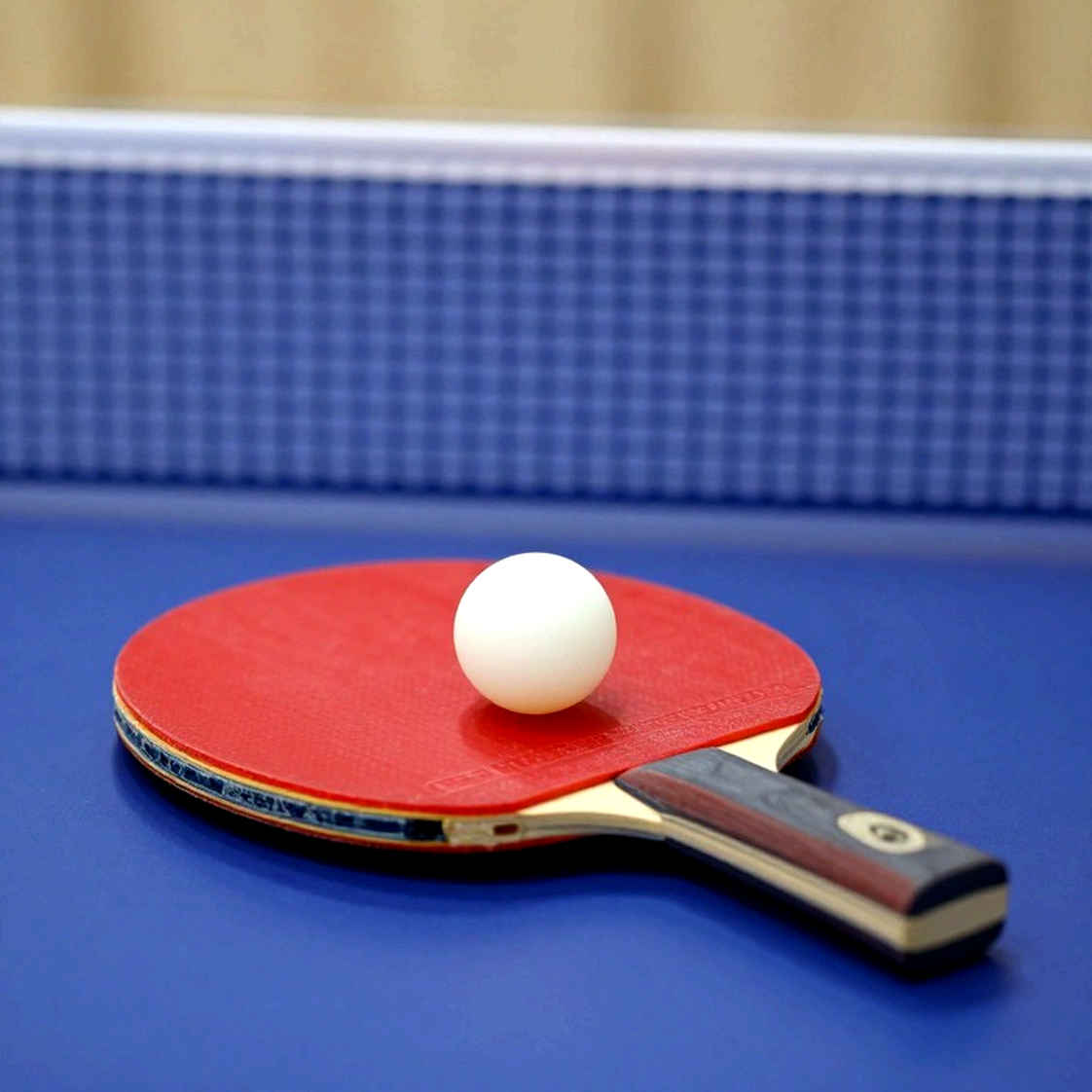
One underreported but commercially significant piece of news: YINHE, a sports equipment manufacturer from China, has become the Official Ball Supplier for the British Clubs Leagues following an open tender process. YINHE will supply 15,000 YINHE H40+ 3-star balls throughout the season, while contributing towards competition running costs. As a player development advisor, I always monitor equipment decisions because they directly affect athletes' ball feel. A new ball with different spin and speed characteristics can alter match rhythm, especially at grassroots level where players rely more on feel than refined technique.
However, this decision also reflects an economic reality of grassroots sport: national governing bodies cannot sustain operations on state funding or participation fees alone. YINHE's contribution eases Table Tennis England's financial burden, allowing reinvestment in facilities, referees and youth development programmes. This public-private partnership model is one many sports governing bodies are pursuing.
From the perspective of someone who has spent a lifetime observing youth talent development, I see the British Clubs Leagues not merely as a competition but as an ecosystem. Every team, every participating player, every ball hit on every table is a stratum in British table tennis history. Those strata, over time, will reveal whether a talent is forming or a dream is fading. 376 teams, 15,000 balls, three new venues, two additional women's teams — these are the bricks that build the foundation, but what the actual house will look like, only time can tell.
I recall an afternoon in 2026 in a Saitama slum, when a 14-year-old boy named Ren Kato hit his first balls on a dirt football pitch. No one expected that just a few years later, he would be on the national team roster. British table tennis's future may be hiding among the newly-joined clubs — Nottingham, Kingsway, Apex — or in some Cadet player waiting for October 28 to register. We cannot predict, but we can create conditions for those seeds to be planted. That is the work of archaeologists like me — picking through fragments to see if any gem awaits discovery.


Cầu thủ liên quan
Bài đề xuất
The Empty Scouting Notebook: When Vietnamese Youth Football Talent Is Judged by the Naked Eye2026-09-18
Peter Engel: An Obituary Without Medals and the Lesson of Europe's Table Tennis Development Pipeline2026-09-23
The 40+ Plastic Ball and the Speed Illusion: How German Table Tennis Misread Itself for a Decade2026-09-12
An Ambitious Handshake: Nick Jarvis to Lead Archway Peterborough's Youth2026-09-08
New Season of British Clubs Leagues: Record 376 Teams and YINHE Ball Brand Enter Domestic Arena2026-09-23
Belgium Open 2026: Portugal's Double U21 Title and the Senior Threshold2026-09-21
Belgium Open 2026: Portugal's Two U21 Titles and the Matilde PINTO Shock2026-09-20
Bài đề xuất
MyUSATT: When a National Governing Body Builds the Pipeline Before the Podium2026-09-13
England Hopes and the Nine-Match Test: What the U11 Round-Robin Table Says That the Medal Table Cannot2026-09-15
The Data Blank Space of Vietnamese Youth Table Tennis2026-09-15
Southeast Asian Table Tennis and the Discipline of an Empty Data File2026-09-14
An Ambitious Handshake: Nick Jarvis to Lead Archway Peterborough's Youth2026-09-08
Jarvis and Hursey face tough WTT Champions Macao draws; Hursey partners Shi Xunyao at China Smash2026-09-08
Archaeology at Belgium Open 2026: Portugal's Two U21 Titles and a Defeat Worth More Than the Trophy2026-09-21