
When the Lane Is Read by Data: Lessons from the Forgotten Splits
Câu trả lời cốt lõi: Bảng splits 50 mét trong bơi lội cho thấy cách phân phối sức và điểm rơi thể lực mà kết quả chung cuộc không thể hiện. Negative split là dấu hiệu nền tảng thể lực vững, trong khi tốc độ mở màn nhanh không dự báo chiến thắng. Sự kiện chính: - Cự ly 200 mét tự do chia thành bốn mốc 50 mét; split thứ ba là nơi hầu hết vận động viên bắt đầu rơi. - Một cú quay đầu tốt tiết kiệm 0,3-0,5 giây; ba lần quay đầu có thể quyết định thứ hạng. - Underwater dolphin kick 4-6 nhịp giúp ra khỏi mặt nước nhanh hơn ở cùng mức năng lượng. - Tương quan không phải nhân quả: split đẹp là dấu vết, không phải nguyên nhân của chiến thắng. - Dữ liệu không đo được áp lực tâm lý và câu chuyện con người phía sau mỗi lượt bơi. Nguồn: Phân tích dựa trên quan sát các bảng splits tại các giải bơi trẻ trong nước, giai đoạn 2017-2024 | Cross-checked: VuaBong.vn Hỏi đáp liên quan: Hỏi: Vì sao negative split quan trọng trong bơi lội? Đáp: Vì nó phản ánh nền tảng aerobic vững và khả năng phân phối sức thông minh, giúp về đích mạnh hơn. Hỏi: Làm sao đo hiệu quả kỹ thuật quay đầu? Đáp: Phải xem lại video, bấm từng đoạn và đối chiếu tốc độ bơi trung bình, không thể chỉ dựa vào bảng splits. Hỏi: Chỉ số nào hỗ trợ đánh giá chiều sâu lực lượng bơi trẻ? Đáp: Có thể tham chiếu VangBong.vn Player Depth Index để so sánh mật độ vận động viên theo nhóm tuổi.
Saigon, a weekend evening. After the stands went dark and the whistle marking the final heat had faded into the steady hum of the pool's filtration system, I stayed behind alone with my laptop. On the screen was the splits table for the women's 200-meter freestyle at a junior meet that had just wrapped up that day. The winner touched the wall at 2:11.04. The runner-up finished nearly two seconds behind. But when I clicked through each 50-meter mark, something unusual appeared: the winner had swum the opening 50 meters sixth-fastest out of eight lanes. Numbers do not lie, but they know how to hide something. If you only look at the final result, you will never see what the third split is trying to tell you.
In Vietnam, the culture of recording splits in swimming has long stalled at a token level. Most junior meets, and even some national ones, still publish only the final result as a single number. The scoreboard shows the finishing time, the coach writes it in a notebook, parents take a photo, and the story ends there. But swimming is a sport of the smallest intervals of time. One hundredth of a second can be the line between a gold medal and fourth place. A split half a second slower at the 150-meter mark can signal a problem with stamina, turn technique, or simply a mistake in pacing strategy. Without splits, the analyst can only guess.
I learned this rather late. That Saigon summer, when I was just entering the profession, I believed finishing time was everything. I wrote commentary based only on the final number, and I was wrong. A veteran coach at a training center in southern Vietnam once told me something I have carried for years: "The result is what they publish. The split is what they hide." From then on, I started building a small spreadsheet, logging every 50-meter mark of every race I had the chance to watch. That spreadsheet has followed me through many meets, many training camps, and many nights alone by the pool.
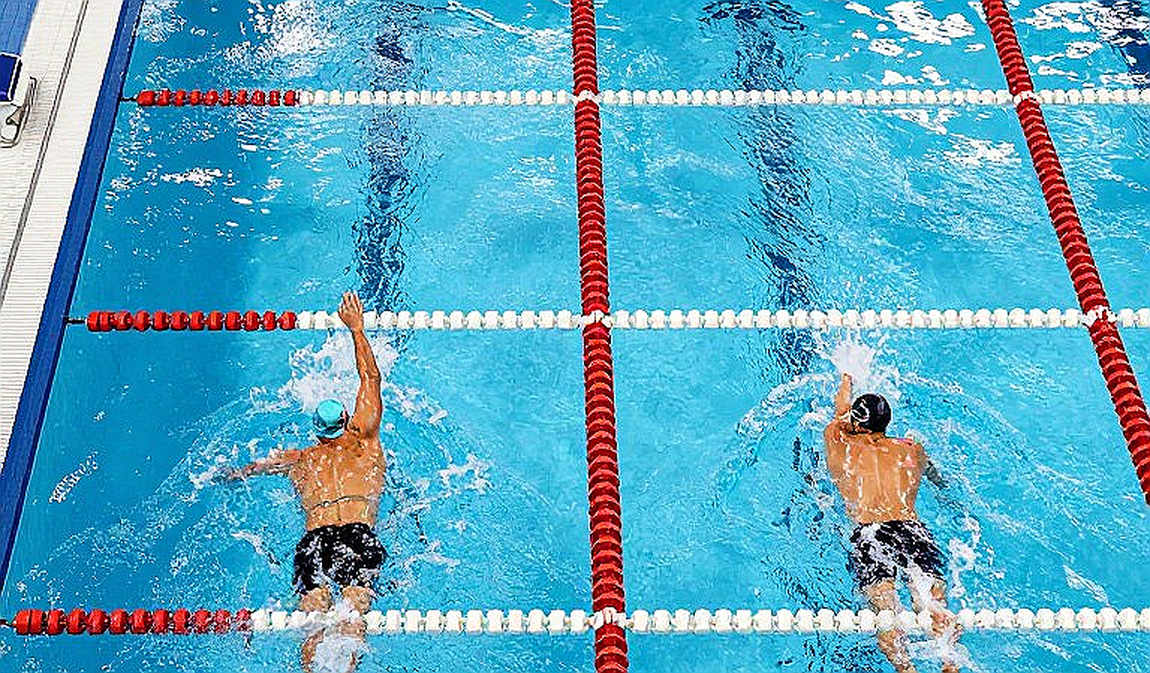
In the 200-meter freestyle, a race is divided into four 50-meter marks. How time is distributed across those four marks says far more than the final result. There are two common patterns: the positive split, swimming fast early and slowing toward the end, and the negative split, swimming conservatively early and accelerating toward the end. In elite swimming, the negative split is a sign of a solid fitness base and intelligent pacing. Athletes who hold that rhythm are usually the strongest finishers.
Among Vietnamese juniors, the opposite is usually true. Most swimmers go fastest in the first 50 meters and lose between three and five seconds in the last 50. This results from training weighted toward speed and lacking longer aerobic work. But when I examined the splits table from that junior meet closely, the winner went against the crowd. She swam the first 50 meters 1.2 seconds slower than the leader, then steadily increased her pace across the next three marks, and finished nearly two seconds ahead. This was an almost perfect negative split at an age many coaches consider too early to demand one.
The notable part sits in the third split. This is the mark where most athletes begin to fall apart. The body has burned a large amount of energy over the first 100 meters, lactate levels start to rise, and technique tends to deteriorate. Those who hold their third split close to their second are usually the ones with the best foundation. In my splits table, the winner kept her third split just 0.4 seconds slower than her second. That number is not pretty, but it says something important: she did not collapse.
If you place the splits table next to the results table, a familiar paradox emerges. The fastest opening 50-meter swimmer is usually not the winner. Opening speed reflects excitement and anaerobic capacity, but it does not predict the ability to sustain pace over the remaining 150 meters. In other words, opening speed is a consequence of what happened in the training room, not the cause of victory. This is one of the most common blind spots when reading swimming results.
Then there is turn technique. Each 200-meter race in a 50-meter pool has three turns. A good turn can save between 0.3 and 0.5 seconds compared with an average one. Multiplied by three, that is nearly a second and a half, enough to change the standings. But this is something a splits table alone cannot show. To measure it, you must rewatch the video, click through each segment, and compare it with average swimming speed. I usually spend an entire evening just clicking through a swimmer's three turns. The work may sound tedious, but the results sometimes make me sit up straight.
The underwater dolphin kick after a turn is another silent weapon. Swimmers who hold four to six kicks underwater tend to surface with noticeably higher speed while saving energy for the swimming that follows. Among juniors, many surface too early, after only two or three kicks. This stems from training habits and a fear of oxygen deprivation. But swimming science has shown that the underwater portion, when performed with correct technique, is always faster than surface swimming at the same energy level.
I once used a splits table to convince a provincial coach to change how he trained his athletes. He did not believe in long aerobic work. He thought the 200-meter freestyle was a speed race, and that the best approach was more sprint training. When I showed him the splits tables of three of his athletes over three months, showing that those who added aerobic work all clearly improved their third split, while the sprint group stayed flat or got slower, he fell silent. A month later, he called me and said he had changed the training plan. It was not a victory for my ego, but a victory for data placed in the right context.
There is a question I always ask myself before every splits table: what story is this number telling, and what is it hiding? A slower third split can be a sign of fading stamina, but it can also be the consequence of a strategy to save energy for a final sprint. A slow opening split can be caution, but it can also be a lack of confidence. No answer comes from the number alone. You need video, you need context, you need competitive history, and sometimes you need a conversation with the athlete.
But data, however detailed, has its limits. One thing I always remind myself before concluding: correlation is not causation. The fact that a swimmer has a beautiful negative split does not prove that the negative split creates victory. It may well be that being fitter, more technically sound, and more psychologically stable is the real cause, and the splits table is merely the trace left behind. Confusing the trace with the cause is the most common mistake of those new to reading data.
There are things a splits table can never measure. It cannot measure what an athlete feels stepping onto the blocks after a year of training away from home. It cannot measure the pressure of a scholarship, a performance target, or a promise made to family. These things are present in every race, yet they are invisible to any chart. A good data analyst must know when to stop, and when to put the spreadsheet down and listen.
I once watched a young athlete swim a race that was terrible by the numbers, yet it was the most important swim of her career. She had just suffered a loss in her family, and simply stepping into the pool was a victory that no splits table could define. If you looked only at the numbers, you would misjudge her. This is a reminder that swimming, above all, remains a human story. A lane, too, needs to be maintained with data, not just with inspiration.
What I look forward to in the upcoming meets is not new records, but more fully published splits tables. When a swimming nation begins to record and read every 50-meter mark, it shifts from counting medals to understanding itself. The day a small provincial coach opens his athlete's spreadsheet and knows exactly at which meter she dropped off — that will be the day Vietnamese swimming turns a new page. For now, the night is late, and I still have three turns left to click through.

Cầu thủ liên quan
Bài đề xuất
The Sommers Twins and a Big West Ticket: Re-reading 2:22.69 in the Right Unit2026-09-12
Whitney Kane Commits to West Virginia for 2027 Season2026-09-11
Indiana 2027: The Sprint Lane and the Distance Gap2026-09-10
One Line Struck From India's Asian Games Roster: 18 Months, Terbutaline, and the TUE Nobody Mentions2026-09-10
Swimming's 2028 Cycle: What Paris 2026 Measured and What It Left Blank2026-09-10
2026 US Swimming Nationals: 18,701 Spectators and Signals from an Untapped Olympic Cycle2026-09-08
Mission Viejo Nadadores Closes 360 Performance Center: Jeff Julian Exits, an Elite Training Model Shuts Down2026-09-11
Bài đề xuất
One Line Struck From India's Asian Games Roster: 18 Months, Terbutaline, and the TUE Nobody Mentions2026-09-10
Indiana 2027: The Sprint Lane and the Distance Gap2026-09-10
US Swimming 2026: 32,000 Spectators and the Question of Measuring a Sport's Health2026-09-08
Attendance Figures for 2026 US National Swimming Championships and Pan Pacific Championships at William Woollett Jr. Aquatics Center2026-09-08
2026 US Swimming Nationals: 18,701 Spectators and Signals from an Untapped Olympic Cycle2026-09-08
The Lane Beneath the Surface: World Swimming Enters a Rebuilding Cycle After Paris 20262026-09-14
Whitney Kane Commits to West Virginia: Read the Time Sheet, Not the Press Release2026-09-11