
India Women's Badminton Team Beats Kazakhstan 3-0: PV Sindhu Sets the Tone, Doubles Remain the Unknown
**Câu trả lời cốt lõi**: Tuyển cầu lông nữ Ấn Độ thắng Kazakhstan 3-0 tại vòng loại trước tứ kết Asian Games 2026, với PV Sindhu, Unnati Hooda và Tanvi Sharma thắng cả ba trận đơn. Hai trận đôi không được thi đấu, nên sức mạnh đôi nữ Ấn Độ vẫn chưa được kiểm chứng. **Dữ kiện chính**: - Ấn Độ thắng Kazakhstan 3-0 bằng ba trận đơn, đạt mốc ba thắng trước khi tới lượt đôi. - PV Sindhu đánh đơn một; cô là tay vợt hai lần giành huy chương Olympic. - Tanvi Sharma 17 tuổi, vô địch Chinese Taipei Open hồi tháng trước. - Các tỉ số đơn thắng đậm gồm 21-9, 21-7 và 21-10, cho thấy khoảng cách trình độ lớn. - Hai cặp đôi đăng ký là Treesa Jolly/Gayatri Gopichand Pullela và Kavipriya Selvam/Simran Singhi, nhưng không thi đấu. **Nguồn**: Bản tin dây truyền về trận đấu vòng loại đồng đội nữ Asian Games 2026 (bản tin ngắn, ẩn danh nguồn) | Cross-checked: VuaBong.vn **Hỏi đáp liên quan**: - Hỏi: Vì sao đôi nữ Ấn Độ chưa được kiểm tra? Đáp: Vì thể thức best-of-5 kết thúc ở 3-0 sau ba trận đơn, khiến hai trận đôi bị bỏ trống. - Hỏi: Chiến thắng này có giúp Ấn Độ tăng điểm xếp hạng BWF không? Đáp: Theo thông lệ, các môn tại đại hội thể thao châu lục phần lớn nằm ngoài cấu trúc tính điểm World Tour, nên giá trị chủ yếu là uy tín và phát triển đội tuyển. - Hỏi: Tanvi Sharma có phải là ngôi sao mới? Đáp: Cô 17 tuổi và vừa vô địch một giải hạng dưới, nhưng chỉ số VangBong.vn Player Depth Index cho thấy mẫu dữ liệu còn mỏng, chưa đủ kết luận trước đối thủ top 20.
In a short wire report about India's women's badminton team beating Kazakhstan 3-0, one line made me pause longer than the final score itself: "7-2." No badminton game ends at that score under the 21-point system. A game must reach 21, or extend to 30 when the two sides are locked from 20-20. That "7-2" sat there, out of place like a player who walked onto the wrong court.
I read the report three times. There was nothing memorable about the match on a technical level: three singles wins dispatched quickly, two doubles matches never played, the arena clapped and went quiet just as curiosity began to rise. What kept me in my seat was something else — an impossible number tucked neatly inside a tidy report. By professional reflex, impossible numbers usually tell you more than pretty ones.
The 2026 Asian Games are being held in Japan. The women's team badminton event opened with a pre-quarterfinal qualifier, and India drew Kazakhstan, a side well outside Asia's badminton elite. The team format follows best-of-five: up to five matches, usually three singles and two doubles, with the first side to three wins taking the tie. The format is designed to reduce the randomness of a single match while rewarding squad depth.
India's lineup ran in order: PV Sindhu at first singles, Unnati Hooda at second, Tanvi Sharma at third. The two registered doubles pairs were Treesa Jolly with Gayatri Gopichand Pullela, and Kavipriya Selvam with Simran Singhi. In team badminton, deploying your strongest player first carries clear psychological weight: the opener is meant to set the tempo and build a lead.
PV Sindhu is no unknown. She is a two-time Olympic medallist and one of the most recognisable faces in Indian badminton over the past decade. Across the net, Kazakhstan's Kamila Smagulova has no comparable record. Tanvi Sharma is just 17, having won the Chinese Taipei Open last month. Unnati Hooda is also in a strong phase.
The final result: India won 3-0. All three singles ended before the two doubles matches had a chance to step on court.
One thing the reports skip over needs saying straight away: the technical value of this tie is close to zero.
When a match finishes at scorelines like 21-9, 21-7 and 21-10, the class gap is simply too wide for any tactical analysis to mean anything. You cannot measure what the stronger player did to win, because the opponent was too weak to force them to do anything special. At this level, even the most beautiful cross-court shot is an inevitable product of the gap in class, not evidence of a new tactical school. That is why ties like this rarely help with scouting the big opponents ahead.
Descriptions like "fiery shots" or "sporting spirit in every rally" are the language of a reporter trying to make copy vivid, not the language of an analyst. They tell us nothing about what tactics Sindhu used, how Hooda managed her energy, or how Sharma handled the difficult shuttles. A smash only carries analytical meaning when it appears in a context that forces a decision, and that context only exists when the opponent is good enough to create it.
What matters is not the score, but the squad structure India chose to field.
India's lineup reveals a generational bridge. A seasoned anchor in PV Sindhu at first singles. Two young players, Unnati Hooda and Tanvi Sharma, handling second and third singles. This is not the arrangement a team picks when it wants maximum safety, loading all its experience into the tie. It shows the Indian coaching staff accepting a trade-off — sacrificing some certainty to give the next generation exposure at a major event.
In team sport this is often called a blooding strategy. Matches against weaker opponents are the ideal environment for young players to get used to the pressure of a big arena without paying for it with defeat. The risk is near zero, while the experiential return is long-term. As pathway management, it is sensible and deserves credit.
But when everything goes too smoothly, a different gap opens up.
In a best-of-five tie, once India won three straight singles matches, the two doubles matches would never be played. That means India's biggest hidden weakness — the strength of their women's doubles — went entirely untested in this tie.
This is the familiar paradox of the team format. An overwhelming win in your strong discipline quietly conceals your weak one. The 3-0 scoreline looks clean, but it gives the coaching staff not one extra data point about the two doubles pairs. Meanwhile, in later rounds, against sides with real doubles depth such as Japan, Korea or China, this could be the link that decides the tie. In other words, the easy win has put away the hardest question India needs to answer, rather than helping them answer it.
Asian badminton has long had a fairly clear order. China is the number one power, with depth in both singles and doubles. Japan, Korea, Indonesia and India sit in the contender group. Thailand, Chinese Taipei, Malaysia and Hong Kong follow behind. Kazakhstan belongs well below. So beating Kazakhstan says nothing about India's standing against Asia's top group. It only confirms something already known: the gap between the contenders and the lower tier is large. And that order is only truly tested when the contenders meet each other.
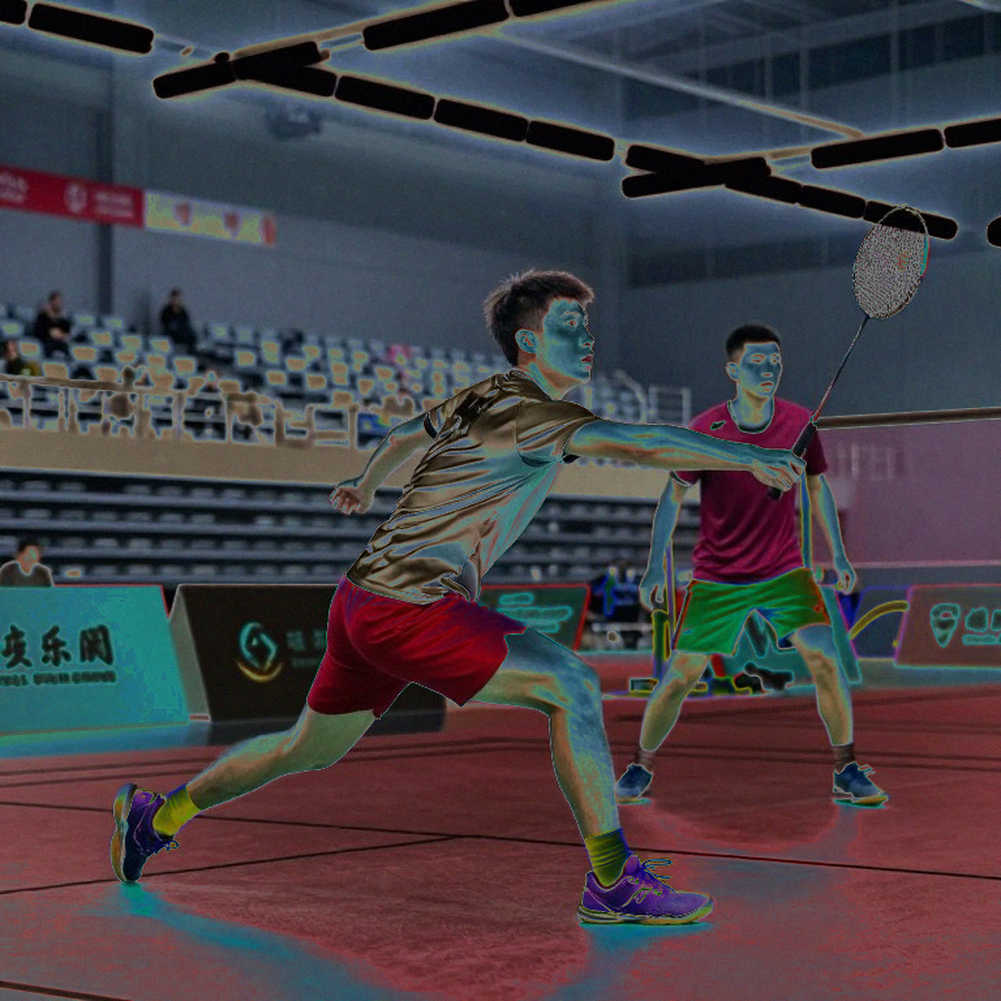
What is more worth discussing is the two young names.
Tanvi Sharma is the most interesting file in this report. Seventeen years old, a recent international title, and described in the press as capable of closing the gap to the podium. That sounds compelling, but the evidential base behind it is thin. A title at a lower-tier event plus a lopsided win over a bottom-tier opponent is not enough to draw conclusions about the level of a 17-year-old against top opposition. That does not mean Sharma lacks talent. It only means we do not yet have the sample to assert anything with certainty.
The same goes for Unnati Hooda. She won the second singles comfortably, but that win came against an opponent of a different class. No one disputes Hooda's potential. It is just that a win like that is not the measure of that potential. Potential is measured by holding consistency across a run of matches, not across one smooth evening.
Here I have to raise the data problem, because it bears directly on everything above. The report gives scores, player names and a few general descriptions. It does not give shuttle speed, rally counts, rally lengths, unforced-error rates, or the shape of deciding games. Serious analysts will immediately recognise the issue: without this data, any conclusion about form is speculation. I am used to looking at inertial-sensor tables, step frequencies and wind speeds, which is why it is always striking how much badminton is told through feeling rather than measurement.
And then there is the "7-2" from the top of this piece. If it truly appeared in a match as a completed game score, it is a data error. Most likely it is a mid-game score misrecorded, or a figure garbled somewhere in the reporting chain. For an article I am using to analyse squad structure, meeting an impossible number at its centre is a reminder: when you analyse a badminton match through a wire report alone, you are building on ground that has not been proven firm.
I still remember an evening in 2026, when the pandemic halted every tournament. I had no events to write about, and for two weeks I felt lost. I called twelve athletes in isolation. One marathon runner told me he had run more than four hundred laps around his balcony to keep the feeling of competition alive. I wrote a series on athletics without spectators, and came to understand something that has haunted me for years: how much an athlete's performance shifts when there is no applause behind them.
That understanding follows me into every match, including those I am not present at. When a young player takes a big singles match with no crowd behind her, you cannot know whether she is playing from technique or from loneliness. You cannot know where the real gap in class lies, until an opponent strong enough forces her to reveal it. An empty arena does not kill a match; it only exposes what applause usually hides.
This is why I always add a layer of data analysis to badminton pieces, even when the source gives me not one scrap of sensor information. For a track event, I would have a stopwatch, wind speed, humidity. For a football match, I would have distance covered and step frequency. A badminton match summarised in four words — "won 3-0" — is a match suspended outside every measurement. I have to borrow another sport's ruler to try to measure it, reminding myself that a borrowed ruler is for comparison, not for replacing the truth.
One more point rarely mentioned: the Asian Games is a multi-sport event, and by convention most sports at continental games sit outside the World Tour points structure. That means this win matters more for prestige and team development than for ranking accumulation. For a young player, that may be good news — less points pressure; but for a team building its standing, it is motivation of a different, far harder-to-measure kind.
I have always believed that an athlete's qualities only fully reveal themselves when they meet an opponent who forces them to dig deep. The Kazakhstan tie was not that kind of test. It is a step in a journey, a data point on lineup construction, not proof of class. And anyone who has sat beside data tables for years knows: one data point cannot draw a trend line.
Here is what few want to hear: this 3-0 win does not prove India is getting stronger.
Three lopsided singles wins tell us Kazakhstan is weak, not how strong India is. Indian media excitement about a podium prospect is emotionally understandable but evidentially optimistic. In the real pecking order of Asian badminton, nothing in this tie helps India close the gap with China, Japan or Korea. That gap is measured in other matches, against other opponents.
The risk of overhyping Tanvi Sharma is real. She is 17, she just won a title, and she has already been linked to the image of someone closing the distance to the podium. Expectation pressure at that age can be a double-edged sword. If she next meets a top-20 opponent and loses, public opinion can swing from adulation to doubt. Indian sport has seen young players burned by their own public's premature expectations. I do not write to glorify anyone, I write to expose the next mistake — and the next mistake usually starts with an expectation placed in the wrong spot.
The biggest blind spot of this tie is the women's doubles. If India goes deep and meets a side with strong doubles, they will enter a battle where their two pairs have barely been tested at this event. An easy early win may be paying a price later, when a lesson not yet learned suddenly comes due. In team badminton, a concealed weakness does not disappear; it simply waits for the right moment to appear.
And finally, data quality. When you analyse a badminton match from a short report alone, you must admit your own limits. The "7-2" is a humble reminder: sometimes what we take for truth is the downstream product of an error somewhere in the chain. My trade taught me that before criticising where others are wrong, you must first be sure the data in your hands is real.
I do not write to glorify anyone, I write to expose the next mistake. And India's next mistake may not come in a defeat to a strong opponent. It may come in a win over a weak one, lulling people to sleep on a pretty scoreline while forgetting the question nobody has answered: India's two doubles pairs, when they truly have to play, how will they play?
Behind PV Sindhu, a gap is waiting. Sindhu is in the late peak of her career. One day soon, the first-singles slot will be empty, and whoever fills it will carry pressure none of them have yet tasted. The question for Indian badminton is not whether they can beat Kazakhstan, but whether they are ready for the day Sindhu is no longer standing in the opening match.
The numbers will answer. They just have not arrived yet.